
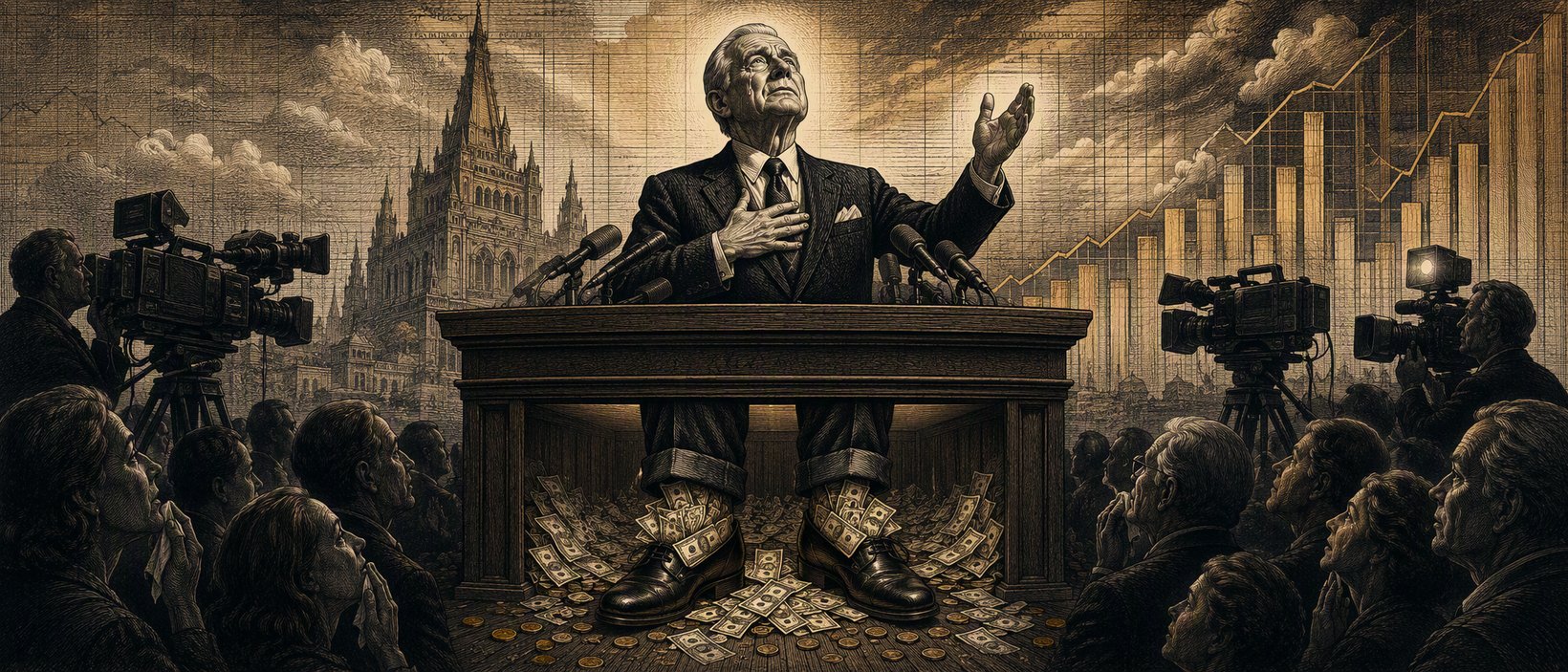
This is the second part of a comparative essay. The first part, The Giggle and the Joke, compared Maharishi Mahesh Yogi and Bhagwan Shree Rajneesh and was published by Ox News: read Part 1 at ox.news. This part holds Gordon B. Hinckley and Thomas S. Monson beside the two teachers of Part 1. It appears in the author’s own words, in his fourth draft. An illustrated edition is available as a PDF.
How to read this
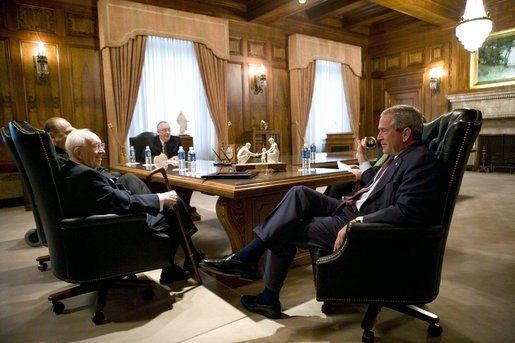
This is a companion to the essay on Maharishi Mahesh Yogi and Bhagwan Shree Rajneesh. It takes that essay’s chapters and holds a third figure up beside them. The third figure is two men: Gordon B. Hinckley and Thomas S. Monson, who sat together in the First Presidency of the Church of Jesus Christ of Latter-day Saints from November 1985 to January 2008, and who between them governed it, as counselors and then as presidents, from 1981 to 2018.
The East sent the West two answers to the question of how a man stands next to God. Maharishi stood below a god-man, his master, and called himself a loudspeaker. Rajneesh stood in the god-man’s place and called himself Bhagwan. The West had its own answer ready. Its theology says that God was once a man and that a man may become God. The Western third is not a guru. It is an office that turns that doctrine into administration: a seat filled by seniority, a corporation named after the seat, a building program, a filing system and a reserve fund.
This essay permits itself some play. It also keeps its evidence in four grades, and says which is which:
- Documented. Primary records, court opinions, regulatory orders, the men’s own published words.
- Credibly reported. Journalism and scholarship that cite records the archive does not hold.
- Testimony. What a witness says he saw. One of the witnesses here is the writer of this essay.
- Reading. Interpretation, mine or the author’s. It is marked when it appears.
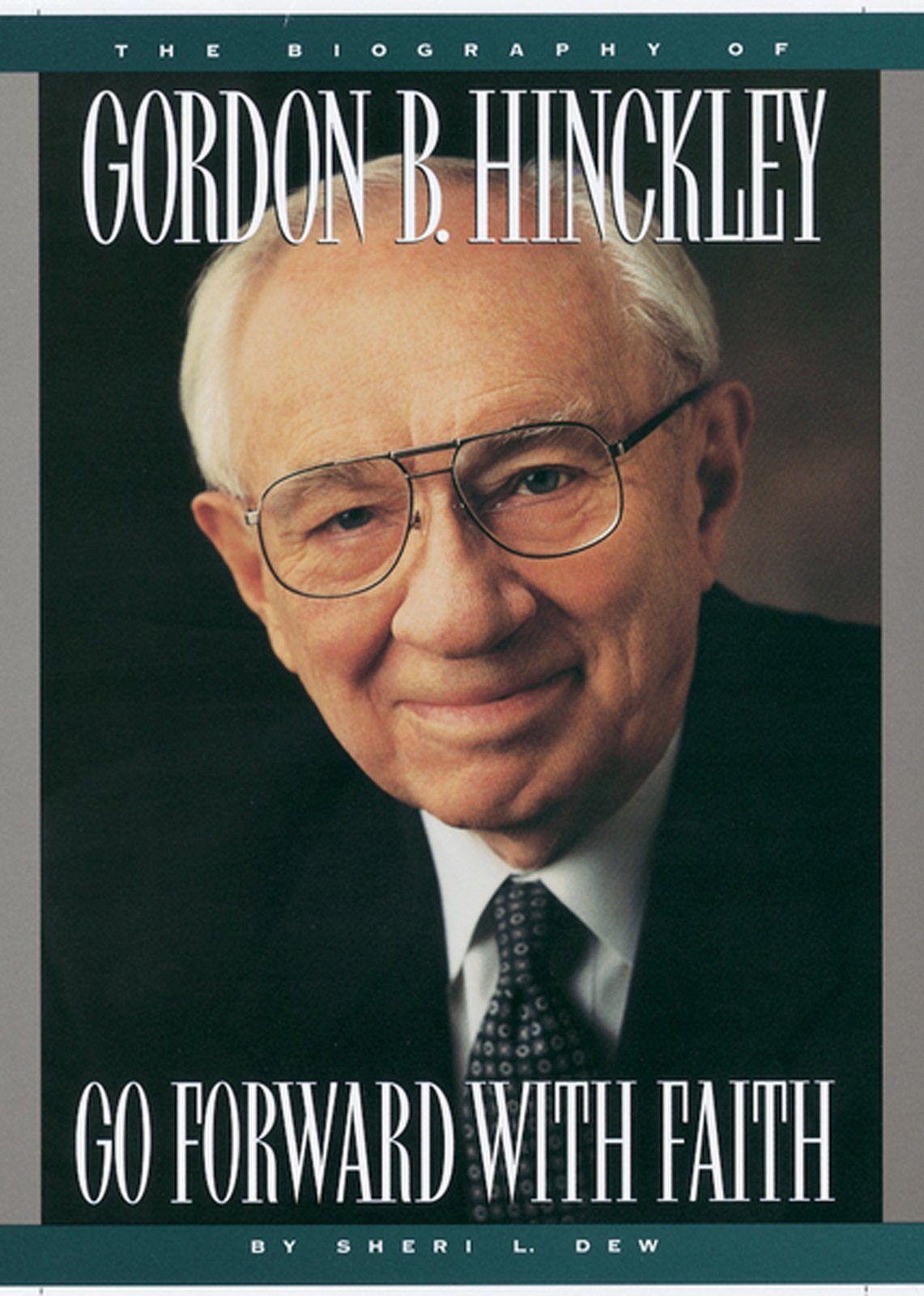
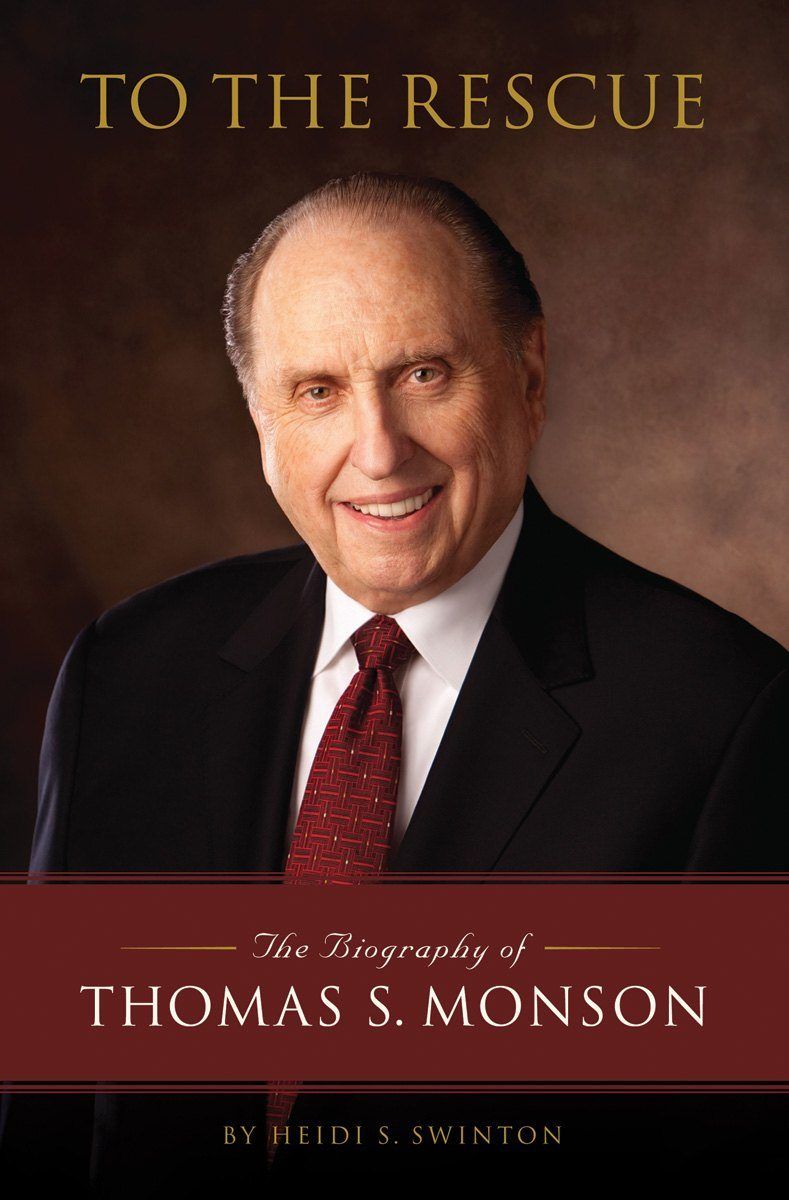
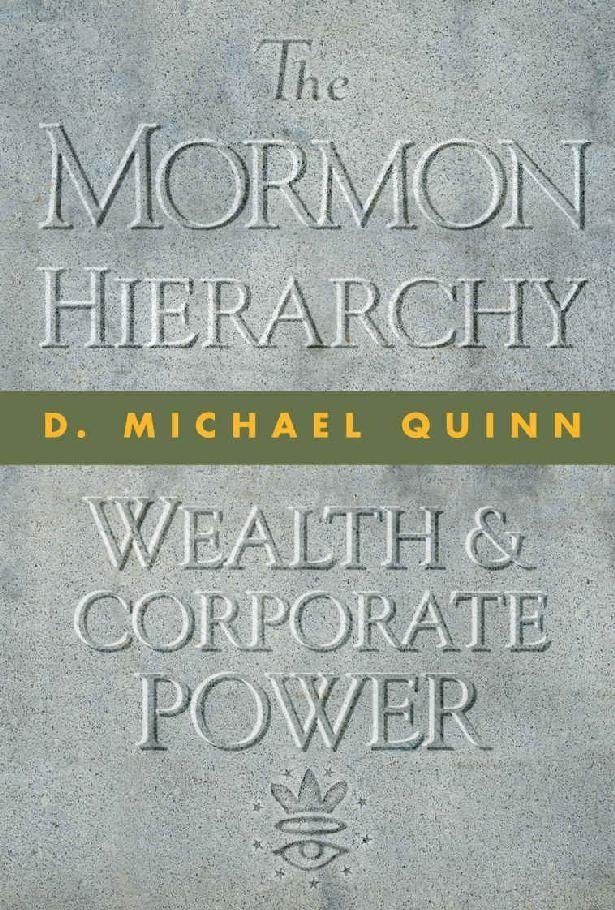
Most of the record comes from the archive’s own research file on Hinckley and Monson, 1980–2018, and from the books it holds: Sheri Dew’s authorized Hinckley biography, Go Forward with Faith (1996); Heidi Swinton’s authorized Monson biography, To the Rescue (2010); D. Michael Quinn’s Extensions of Power (1997) and Wealth and Corporate Power (2017); Matthew Bowman’s The Mormon People (2012); the SEC order of February 2023; the Ninth Circuit’s Huntsman opinions; and the 2019 letter to the IRS by Lars Nielsen. Where a claim comes from the research file, the parenthesis names the file’s section: “HM Q8” means question 8 of that file. The source note at the end gives the rest.
One asymmetry should be stated at the start. Much of the evidence against the Eastern teachers was intimate: a lover, an attendant, a member of staff. The evidence here is mostly institutional: authorized biographies, filings and court records. The archive holds no Western Shumsky, and the comparison should be read with that in mind.
I. Introduction: one office, two men
Maharishi and Rajneesh sold meditation to a postwar West that had lost faith in church, party and analyst. Hinckley and Monson ran the church that West was losing faith in. They faced the same market from the other side of the counter.
Set the three side by side and the old resemblances return. Each figure held authority while saying it held none. Each ruled through intermediaries. Each kept money and man formally apart while the man decided how the money moved. Each spent his last years in seclusion while an organization spoke in his name.
But the Western third breaks the pattern at one point, and that point organizes everything after it. Maharishi and Rajneesh each had to invent a way to be near God. Hinckley and Monson inherited one. Their church already taught that God was once a man and that men may become gods. The teaching travels as a couplet credited to Lorenzo Snow, which Hinckley himself recited in 1997 as “As man is, God once was. As God is, man may become.” So they never had to claim godhood. They only had to hold the office through which the church administers it: the temples, the money that builds them, and the files that decide who may enter them.
The East offered a guru. The West offered a bureaucracy of becoming God. And the bureaucracy had two clerks.
II. Two apprenticeships: the press release and the print order
Maharishi’s apprenticeship was obedience: twelve years at his master’s door. Rajneesh’s was aloneness: no master at all. The Western pair served a third kind of apprenticeship. They learned the church from its paperwork.
Hinckley’s road ran through publicity. Dew’s authorized biography shows him as a young missionary in England, assistant to the mission president, given “his assignment to oversee the mission’s publicity.” He was then asked to prepare filmstrips: one on the coming forth of the Book of Mormon, one on church history, and a third that “presented a favorable image of Salt Lake City.” They helped missionaries “dispel some of the distasteful rumors that had persisted for years in England about the Mormons” (Dew). Back home he worked for decades on the church’s missionary literature, its media and its message. By the 1960s he sat on the boards of Bonneville International, the church’s broadcasting company, of KIRO in Seattle, and of the Deseret News Publishing Company (Dew). By 1989 he chaired Bonneville (Deseret News, credibly reported; HM Q13). Later President Stephen L Richards named him “executive secretary of the General Missionary Committee” and charged him with “overseeing the day-to-day operations of the Missionary Department” (Dew). The phrase “day-to-day” will come back. It is the phrase that describes his whole career.
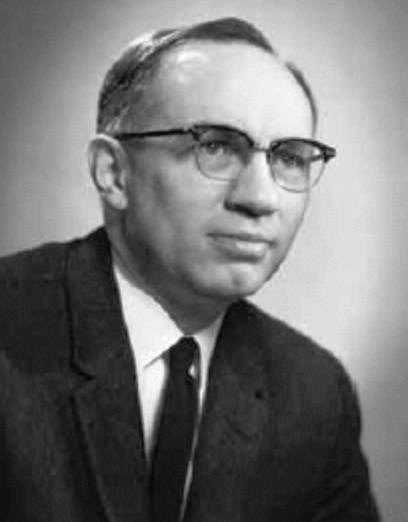
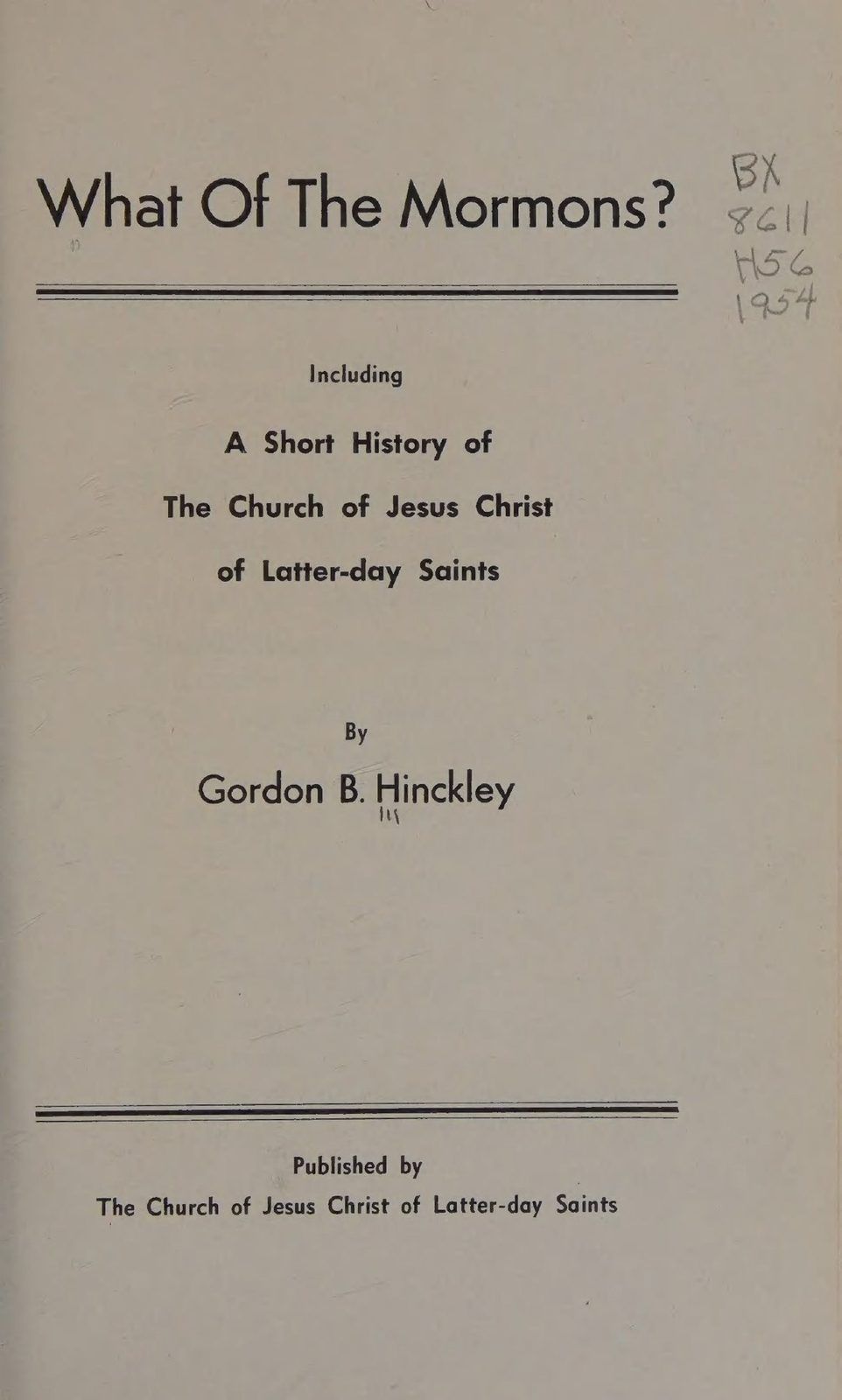
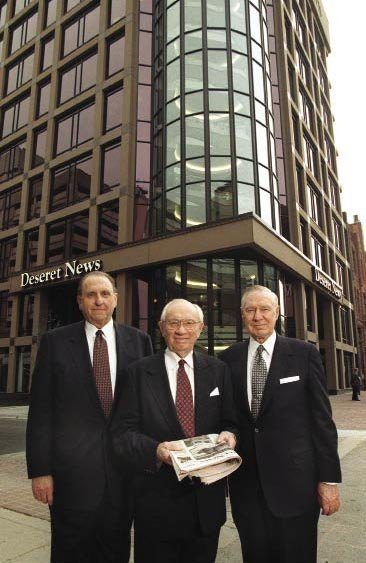
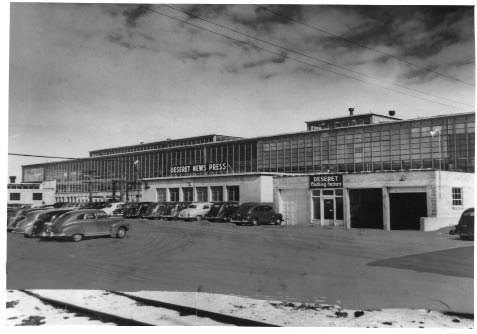
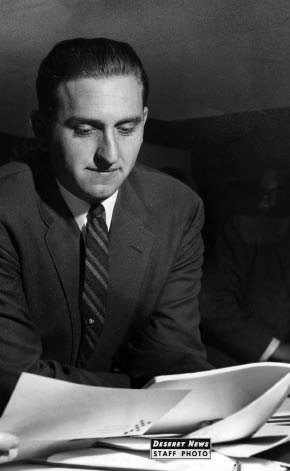
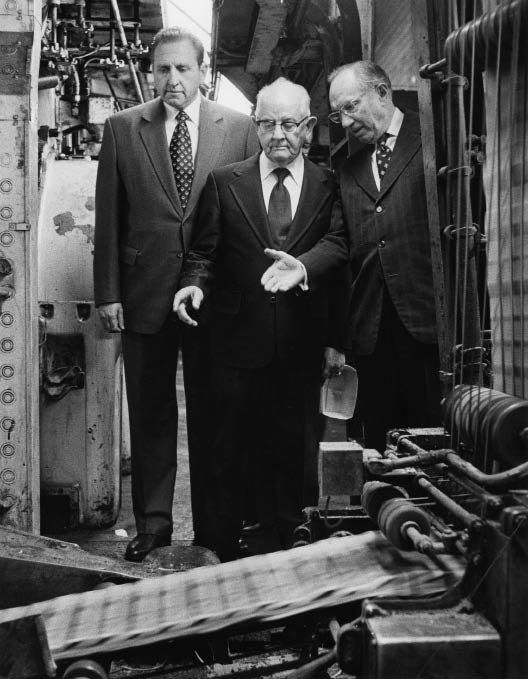
Monson’s road ran through the press. He apprenticed as a printer, and in December 1952 he was called back to the Deseret News Press to train as assistant general manager (Swinton). Swinton records how the two men came to know each other. It was not a vision. It was inventory. Hinckley “directed the missionary office with its catalog of mission literature numbering well over one hundred items,” and keeping enough of every item on hand was his job. Monson’s job was to help him. “The two would plan what to print, how many to print, and when to print or reorder. ‘The biggest job was placing orders for the Book of Mormon,’ Tom recalls” (Swinton).
That sentence is the seed of everything here, so it is worth saying slowly. The first thing these two men did together with scripture was count it.
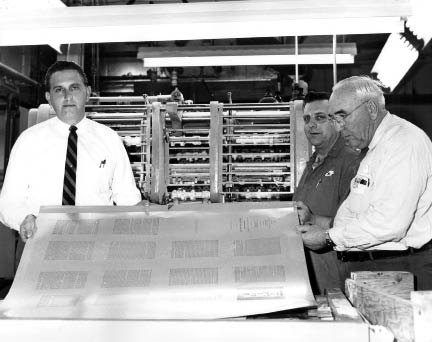
Monson’s habits of mind show in Swinton’s smaller details. As a young bishop he sat in stake meetings where a high councilor, a cabinetmaker named Kasper Fetzer, displayed “a board showing the statistics of the different wards. The board was so large that it had to be made in two parts, with hinges in the center connecting the top and bottom halves.” Half the wards appeared above the hinges and half below. “Bishop Monson worked hard to keep his ward ‘above the hinges’” (Swinton). A hinged board of numbers, carried into a church meeting, and a young bishop working to stay above the fold. The project this essay belongs to works from one kernel, which is its working hypothesis, not a finding: members are moved by quantification more than by argumentation. This essay tests the hypothesis rather than proves it. Monson grew up inside it. He did not need to be told.
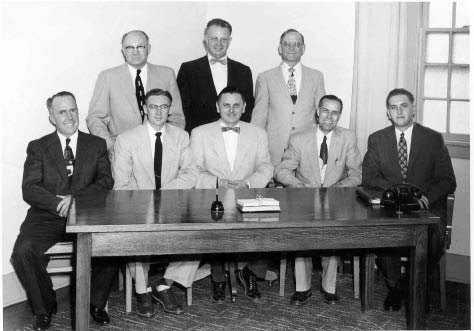
Reading. Maharishi became a custodian because he served a master. Rajneesh became an author because he served no one. Hinckley became a voice and Monson became a ledger because they served a catalog. One learned what the church should look like. The other learned how many copies to print.
III. Public manner: the giggle, the joke, and the tear
Maharishi giggled. The laugh defused a hostile question and left the questioner nowhere to go. Rajneesh joked. The joke attacked, and made the listener feel part of an elite.
Hinckley’s register sits closer to the giggle. He was warm, quick and folksy, and he deflected with good humor. Two of the four men in this comparison sat across from the same interviewer. Larry King had Maharishi on in May 2002. He had Hinckley on in September 1998 and again in December 2004.
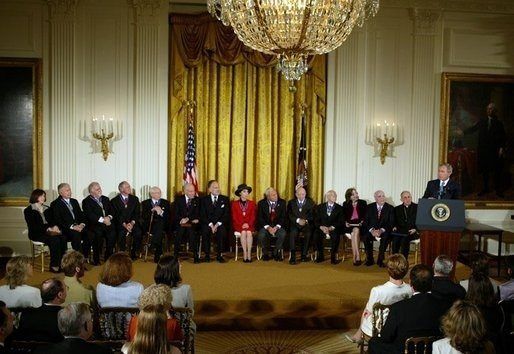
Asked in 1998 why the church was so wealthy, with King putting the figure at $5.9 billion, Hinckley said: “Well, I don’t know about that figure, but we get along. We have enough to take care of what we need to do. The financial law of the Church is the law of tithing” (CNN transcript, documented in substance; HM Q1). In 2004 King asked again where the idea of a rich church came from. Hinckley said: “Well, that comes from the perception they have of what they see” (CNN, documented; HM Q1).
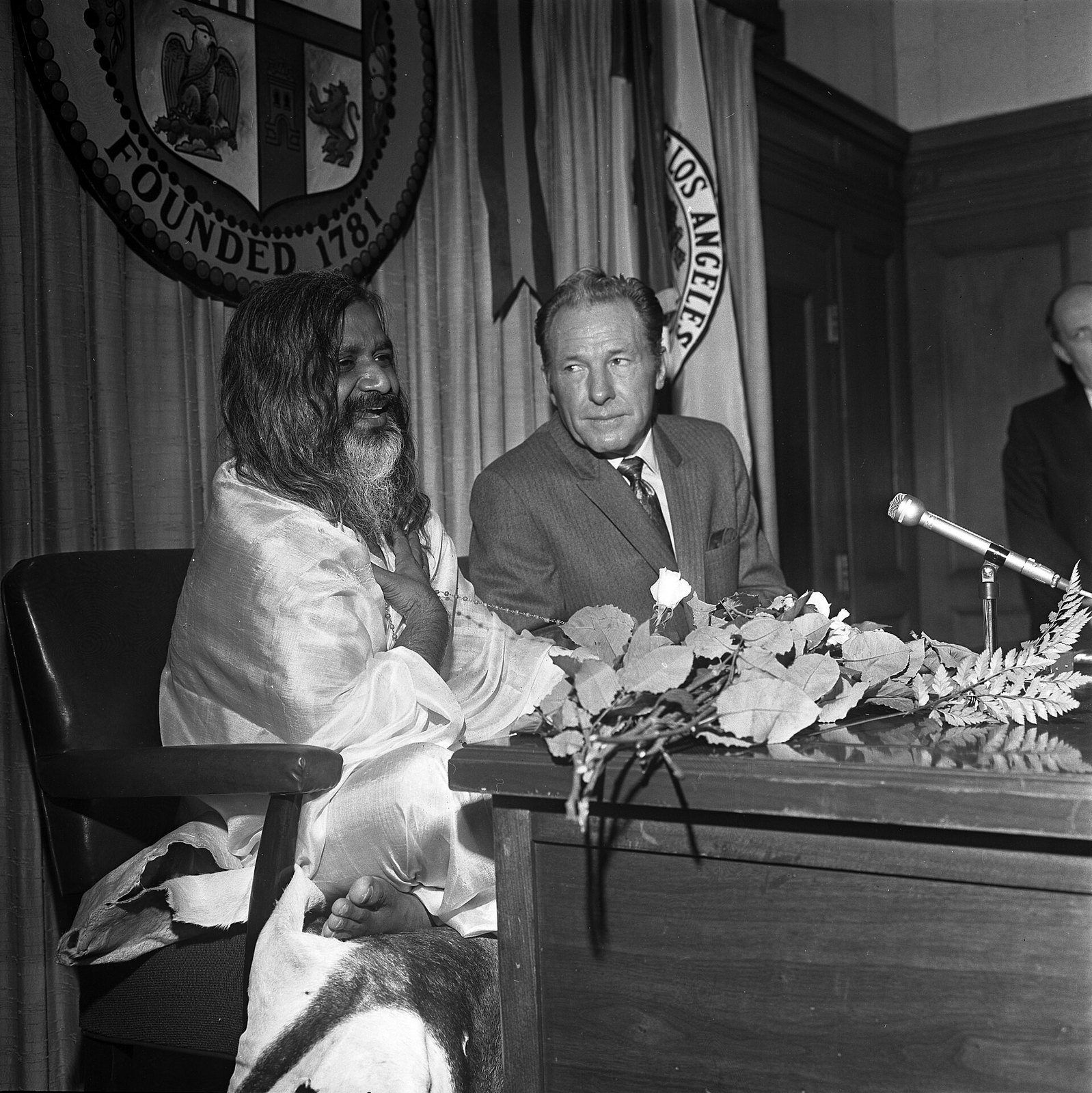
Set that beside Maharishi in 1968. Asked his age, he said, “As you look at me.” Same move, same mood. The question is handed back to the person asking it, and the speaker stays out of reach.
Monson’s register was the story. Swinton’s book is a long chain of them: the widows on Gale Street and Orchard Place, the widow who phoned ahead to say he was coming, the prompting obeyed. “When you honor a prompting and then stand back a pace, you realize that the Lord gave you the prompting. It makes me feel good that the Lord even knows who I am” (Swinton). The story did for Monson what the giggle did for Maharishi. It lowered the temperature. Nobody argues with an anecdote about a widow.
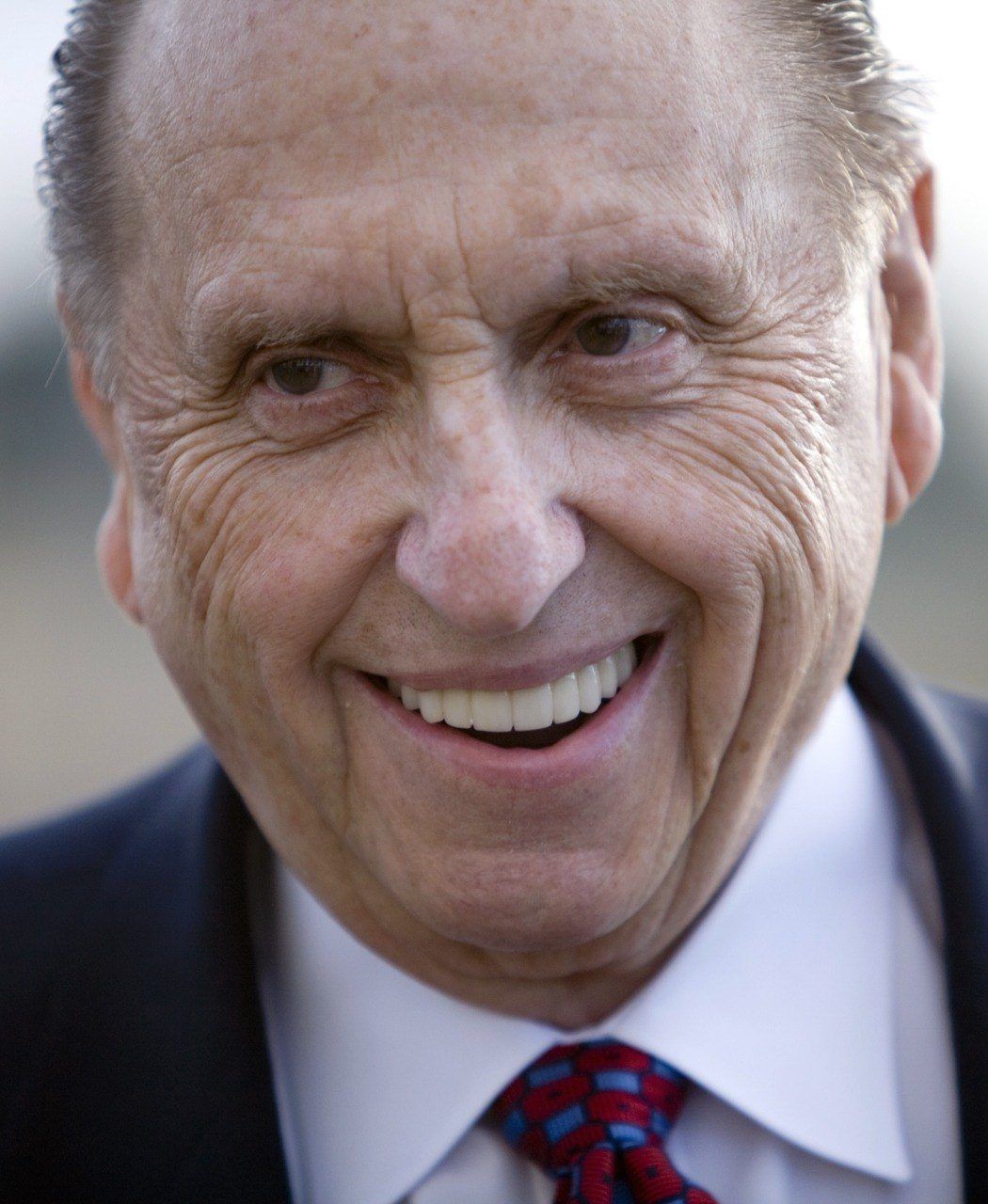
And then there is the tear. The giggle defused. The joke provoked. The tear consecrated. On one occasion, which this essay takes up next, a witness watching a screen in another room of the temple saw Hinckley weep and heard him say that God himself was in the room.
Reading. Here is the division of labor between the two clerks. Hinckley supplied the feeling. Monson supplied the proof that the feeling was being acted on, one widow and one ward board at a time. Feeling and count. The tear and the ledger.
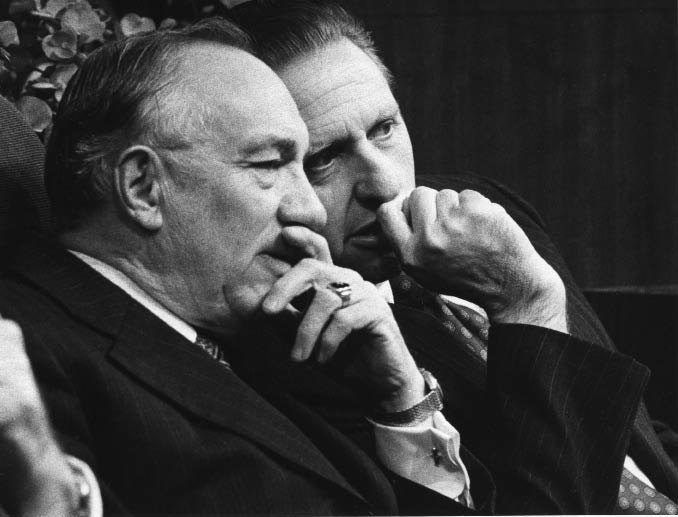
IV. The room at Timpanogos
This is the center of the essay, so its grades need to be clearest here.
Documented. Hinckley, then First Counselor to Ezra Taft Benson, presided at the groundbreaking for the Mount Timpanogos Temple in American Fork, Utah, on 9 October 1993 (Dew, chronology). By the time he dedicated it three years later, he had been president of the church since 12 March 1995, when Thomas S. Monson ordained him (Dew, chronology). The dedication ran a week of twenty-seven sessions, from 13 to 19 October 1996. He was eighty-six. He presided at eleven of the sessions and at the cornerstone ceremony; Monson and James E. Faust presided at eight each (Church News, 19 October 1996). The first session alone was seen by 11,617 people, in person or by closed-circuit television (Ensign, December 1996). Neither report quotes what Hinckley said about God’s presence. The Church News records only that “tears flowed openly.”
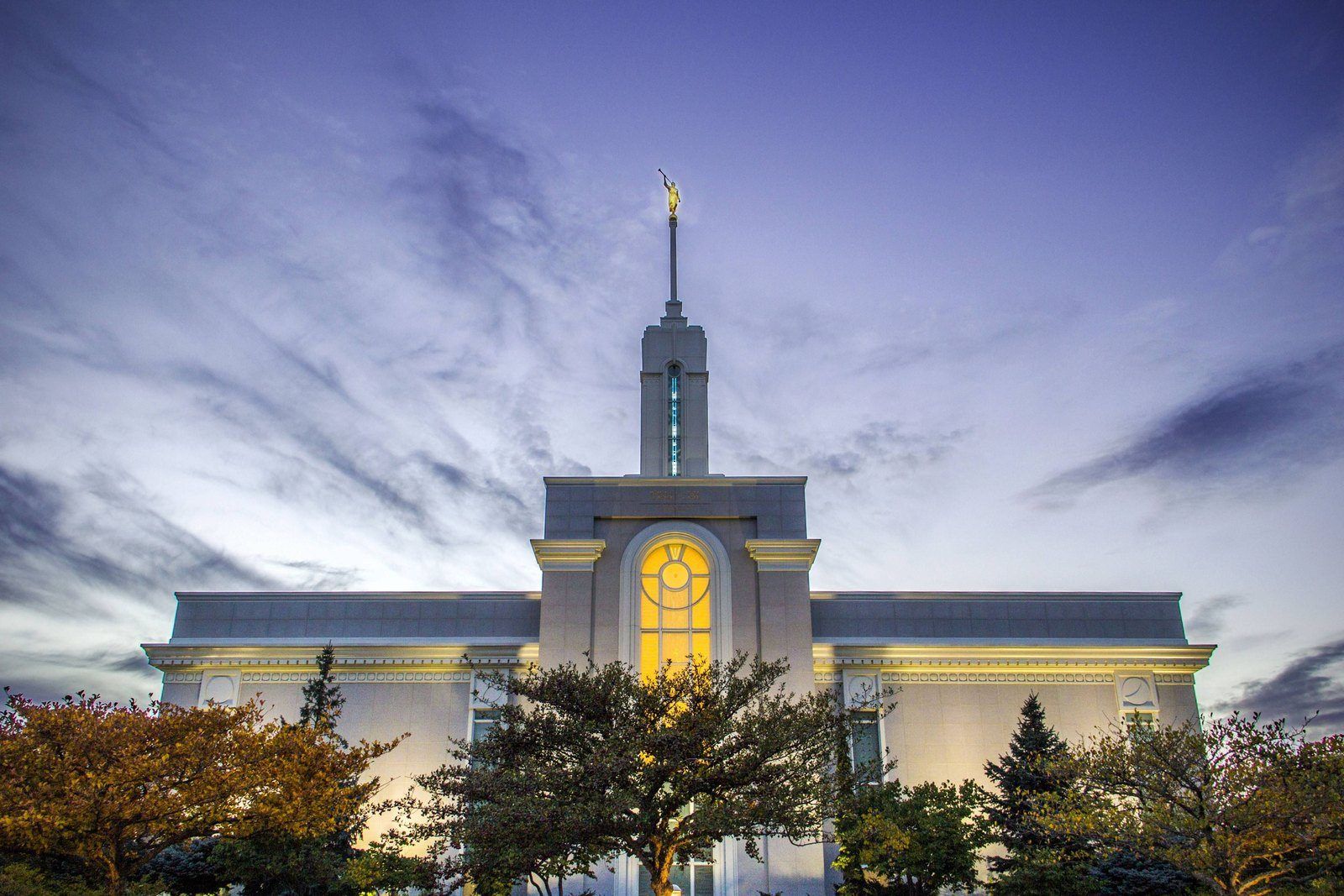
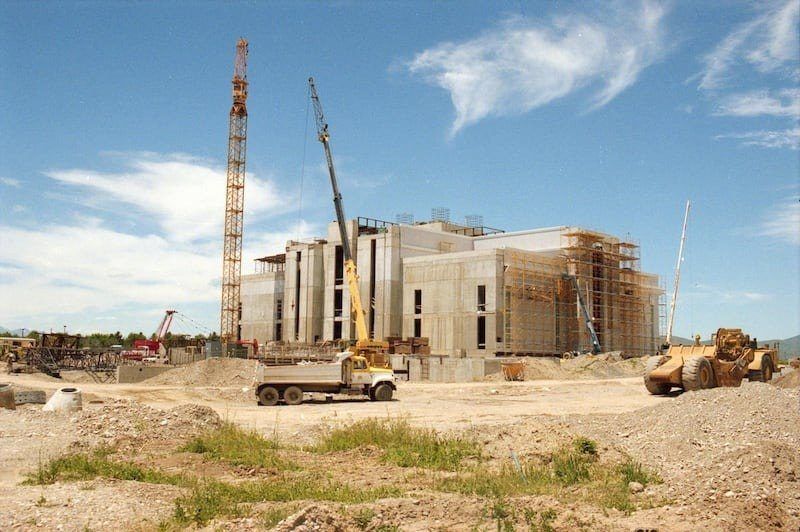
Testimony. The writer of this essay was there. He sat in a sub-room, one of the temple’s side rooms, where screens were placed throughout, and the closed-circuit broadcast inside the temple carried Hinckley’s dedicatory speech. On the screen he watched Hinckley, an old man at the height of his office, weep and say that Elohim, God the Father, was in the room with him. Those words come from the writer’s memory, and they should be cited as one person’s eyewitness account. The archive holds no transcript of the session, and the church’s own reports do not quote the remarks. Inference, marked. Hinckley spoke at eleven of the twenty-seven sessions, so the writer’s session was one of those eleven.
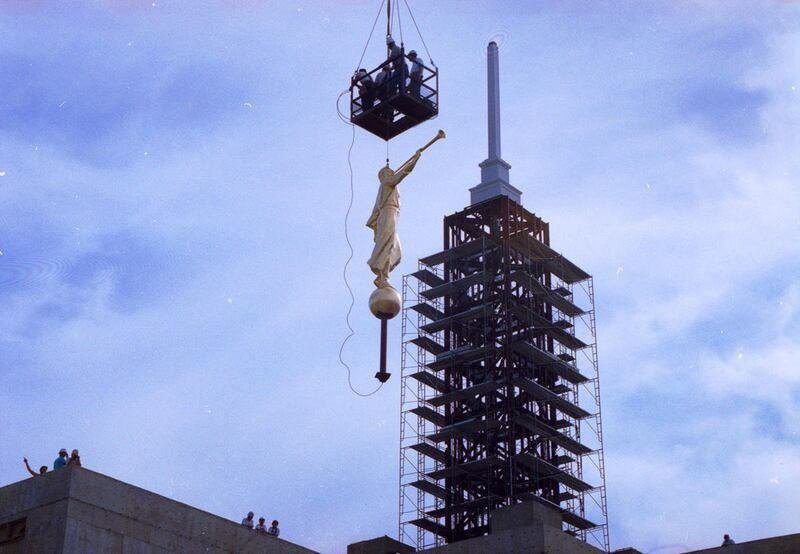
Reading: the author’s theory. The writer’s theory is that Hinckley said Elohim was present because he was feeling the sublime, emotional overwhelm of his own importance. He stood at the pinnacle of power, in a building whose ground he had broken three years earlier, facing people who sustained him as God’s mouthpiece. That is not unlike the place God himself holds among the Latter-day Saints. On this reading, the presence he felt in the room was real. It was his own station, felt so strongly that it could only be named as God.
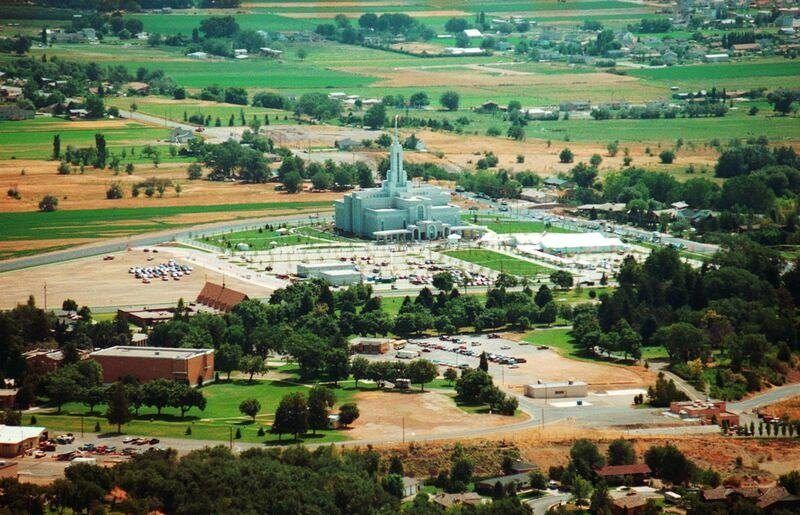
Philosophy has a precise word for this move, and the archive holds the book that gave philosophy this use of it. In the Critique of Judgement, Kant asks why the sublime overwhelms us. His answer is that the overwhelm is respect, and that the respect is really for ourselves. “The feeling of the sublime in nature is respect for our own vocation, which we attribute to an object of nature by a certain subreption (substitution of a respect for the object in place of one for the idea of humanity in our own self—the subject)” (Kant, Critique of Judgement, §27, Meredith translation revised by Walker, p. 88 of the edition held).
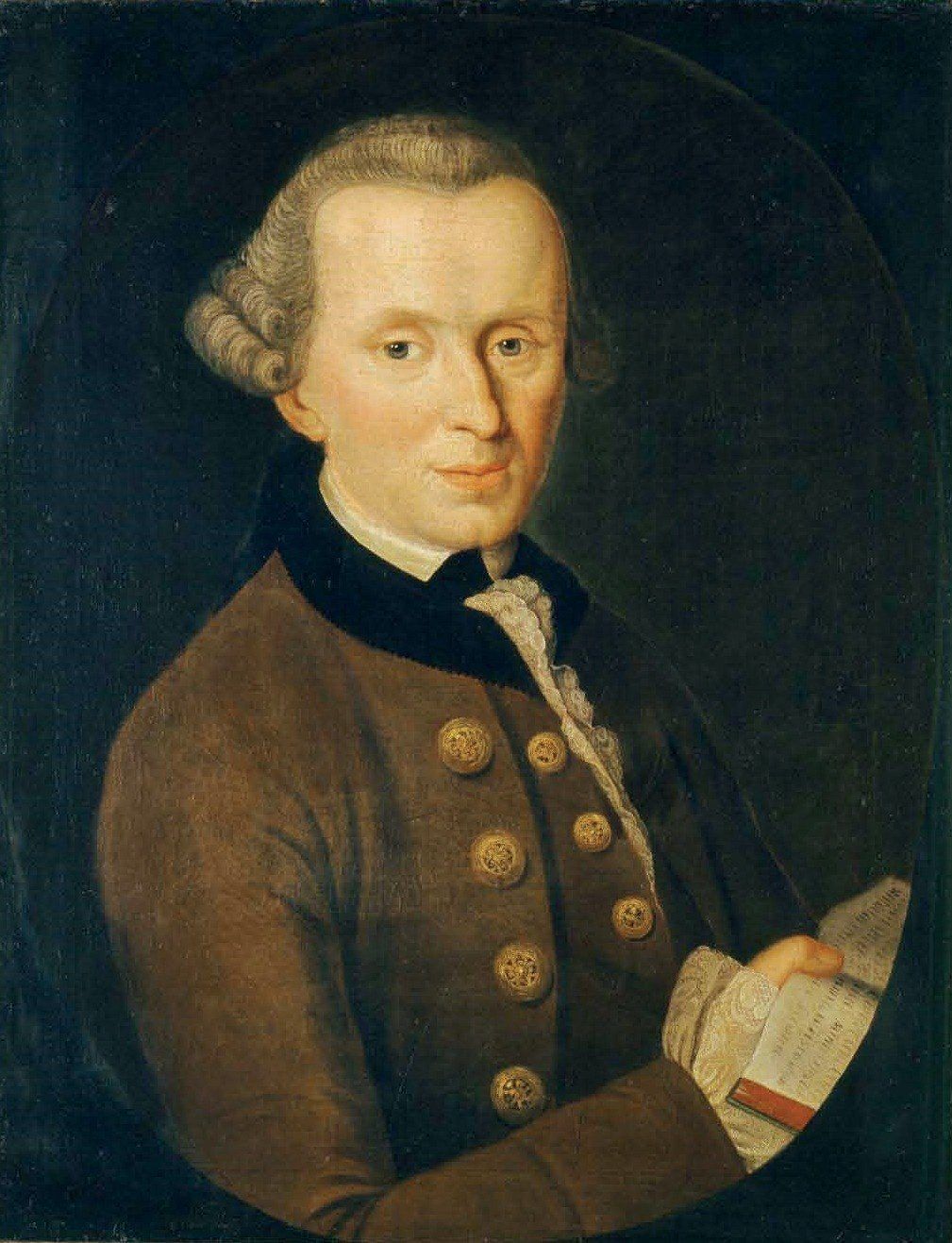
Kant meant the moral vocation, the idea of humanity in the subject. The reading here extends his mechanism from the moral to the institutional: the respect is for an office, felt by the man who holds it. The closer ancestor of that extension is Feuerbach, who is also in the archive: “Consciousness of God is self-consciousness, knowledge of God is self-knowledge” (Feuerbach, The Essence of Christianity, Dover edition, BIA-S07-¶023). The theory of Timpanogos is Feuerbach’s projection, described in Kant’s vocabulary.
Subreption is a substitution done without noticing. Something felt inside is credited to something outside. A man stands on a cliff, feels the size of his own mind against the storm, and calls the storm sublime. The author’s theory puts the same substitution at Timpanogos. A man stands at the top of an office that his theology says leads toward godhood. He feels the size of his own vocation. He credits the feeling to Elohim, and names it as presence in the room.
The theory gets support from an unexpected witness: Hinckley himself. Six months after Timpanogos, the San Francisco Chronicle asked him what revelation feels like. “Quietly. Usually no voice of any kind, but just a perception in the mind” (SF Chronicle, 13 April 1997, held in the archive). By his own account, then, revelation is something that arises inside the prophet and is credited to God. That is not a refutation of faith. Every believer makes the move from feeling to source. But it means the subreption reading does not have to be smuggled in from outside. It sits in the prophet’s own description of how he knew things.
Dew’s biography records the same structure at the start of his life. Not long after he was ordained a deacon, the boy went with his father to a stake priesthood meeting. Three or four hundred men stood and sang “Praise to the Man,” the hymn to Joseph Smith. “Something happened within me as I heard those men of faith sing,” he remembered. ”... I felt a great moving power, both emotional and spiritual. ... There came into my heart a conviction that the man of whom they sang was really a prophet of God” (Dew). A believer would call that the witness of the Holy Ghost, and Hinckley did. Reading: the boy in the back row and the old man in the temple are one structure at two ends of a life. In the first, the power of a gathering is credited to the prophet the gathering sings about. In the second, the prophet is the man the gathering has come to see, and the power is credited to God.
The Chronicle interview gives the other half of the picture. Asked whether Latter-day Saints believe God was once a man, Hinckley said: “I wouldn’t say that. There was a little couplet coined, ‘As man is, God once was. As God is, man may become.’ Now that’s more of a couplet than anything else. That gets into some pretty deep theology that we don’t know very much about” (SF Chronicle, 1997). That summer Time asked him the same question. “I don’t know that we teach it. I don’t know that we emphasize it,” he said (as quoted by the historian Matthew Bowman, The Mormon People, 2012, MP-S14-¶027, p. 229).
So put the two scenes side by side. October 1996, inside the temple, before the faithful: Elohim is in the room with me. April 1997, at the press table, before outsiders: that God was once a man is only a couplet, and we don’t know much about it. Inside, the god-man is present. Outside, the god-man is disowned.
That is the exact mechanism the Maharishi–Rajneesh essay found in both Eastern teachers: authority disowned in public and exercised without appeal. Maharishi was “only a loudspeaker.” Rajneesh’s organization was “just like the post office.” Hinckley’s doctrine of divine becoming was “a little couplet.” Each disavowal made the real claim harder to question, because the claim was never made where a questioner stood.
There is a joke folded inside this, and the essay may as well take it. The couplet Hinckley disowned has two lines. The church he ran had two clerks. Line one: as man is, God once was. Line two: as God is, man may become. Hinckley was the first line, the old man at the top who had arrived. Monson was the second, the man waiting his turn by seniority. The Western third was itself a little couplet.
The other rooms. The phrase the writer remembers is “in the room.” He was not in that room. He was in another one, watching a screen. Hinckley spoke from one room of the temple, and everyone in the other rooms saw him as the writer did, by closed-circuit television (inference, from the arrangement the Ensign describes). The church’s count draws no line between the two kinds of presence: 11,617 people “viewed” the first session, in person or by closed-circuit television.
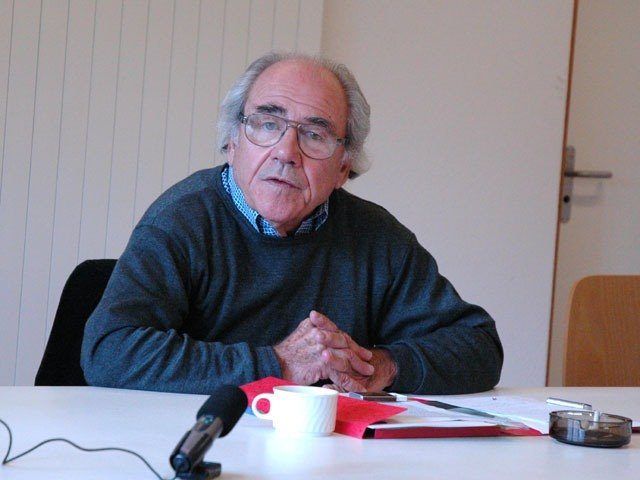
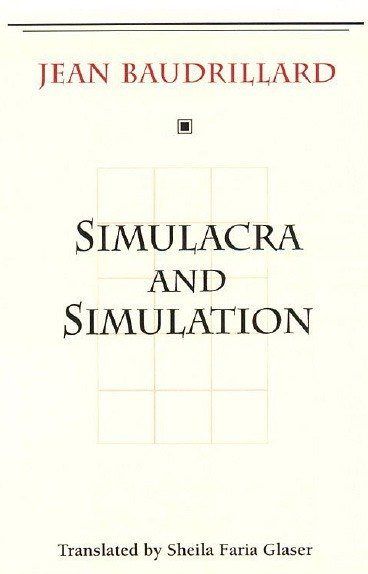
Reading. The writer’s verdict is short: it was simulacra. Baudrillard’s phases of the image make the verdict exact. To the man in the room, the presence was a feeling, and on the author’s theory the feeling was his own summit, credited to God. To the people in the other rooms, the presence was a picture of a man having that feeling. They were shown a sign of presence whose only evidence was the sign. It did not need to reflect anything they could check in order to work, and when it had worked, the church counted the picture as attendance. Baudrillard’s simulacrum is “never exchanged for the real, but exchanged for itself, in an uninterrupted circuit.” The temple’s own name for its system was closed circuit. It carried the sign of God’s presence from one room to the others, inside a circuit no outsider could tune in to.
Hinckley was, of all men, the one to become that image. He began as a missionary making filmstrips to give England “a favorable image of Salt Lake City.” He sat on the board of the church’s broadcasting company and later chaired it. At Timpanogos, at eighty-six, the publicist became the broadcast. The filmstrip had learned to weep.
The other reading, stated fairly. A believer would say Hinckley wept because he believed, and because temple dedications in his tradition are meant to be moments when heaven comes near. An old man’s tears at the end of a long life of service need no theory. A believer would answer the screens too. A dedication dedicates the whole house, not one room, and on that view the Spirit is not confined to the room with the camera. The church’s own report says tears flowed openly that week, so the weeping was not his alone. His son remembered that at home “Dad prayed very sincerely but never with a theatrical or emotional air” (Dew), which suggests that tears from him were not a habit of performance. And Bowman reads the Time answer as “less an evasion than a recognition of the modern place of theology in the church”: what matters in Mormonism, he writes, is “whether a member is in the pews every week, holds a calling, and can be relied on if a bishop is looking for somebody to drive an elderly widow to the hospital” (Bowman, p. 229).
Both readings fit the testimony, and nothing in the testimony settles it. The occasion does not decide: a believer expects God to feel nearest at a dedication at the end of a life of service, just as the author’s theory expects the summit to feel enormous. Hinckley’s account of revelation as “a perception in the mind” does not decide either, because that is how any believer describes the Spirit. What the author holds is a reading, not a proof. What would count against it is evidence that Hinckley reported such presences on ordinary occasions, far from any summit. So the argument does not rest its weight here. It rests on the structural claim of Section XIV: an office that needs no outside certifier, which does not depend on reading one old man’s heart.
Reading. Bowman’s reading is fair, and it does not so much rescue the couplet as move it. If the creed that counts is the pew, the calling and the ride to the hospital, then the church’s working creed is a ledger of attendance.
If the testimony is set aside. A hostile reader will aim at this page, so it should say plainly what depends on it. Set the testimony aside entirely and the argument loses its best scene, not its structure. The downward half of what Section XIV calls subreption of office stands on documents alone: the seniority rule, the machine-signed certificates, the corporation named after the chair. The upward half keeps its shape from Hinckley’s own words: revelation as “a perception in the mind,” and a boy’s conviction arriving as “a great moving power” in a hall of singing men. The screens do not depend on the testimony either: the Ensign itself records that the dedication was received by closed-circuit television. What the testimony adds is the occasion: the feeling arriving at the summit, and the screen it arrived on.
V. The threshold: an ordinance and a ledger
Maharishi offered a technique: twenty minutes twice a day, a fee, and then go home. Rajneesh offered an identity: a new name, sunrise clothes, a mala with his face in the pendant. The Western threshold is both, and it is sold in installments.
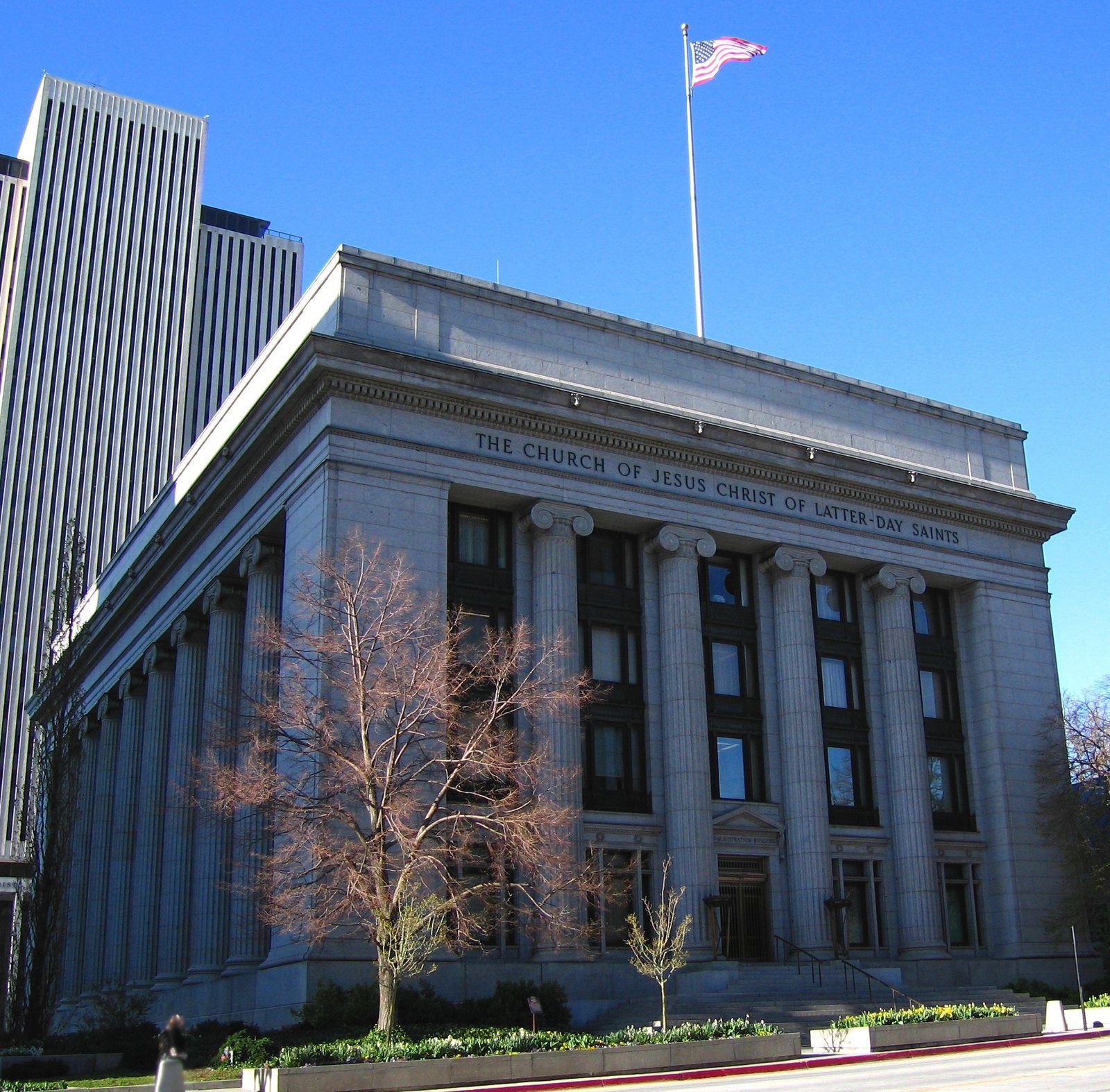
Entry is light: baptism, a ward, a calling. But the step that matters is the temple, and the temple door has a ticket. The recommend asks, among other things, whether one pays a full tithe. In January 1983 the First Presidency (Kimball, Romney and Hinckley) went further and denied temple recommends to members who refused to pay state or federal income tax. The letter was answering tax refusers in the church’s own ranks: “We are now informed that there are members of the Church who also refuse to pay state income taxes” (Quinn chronology, documented; HM Q13). The sacred threshold became an enforcement point for the state’s tax law, while the institution itself had stopped publishing its own accounts in 1959.
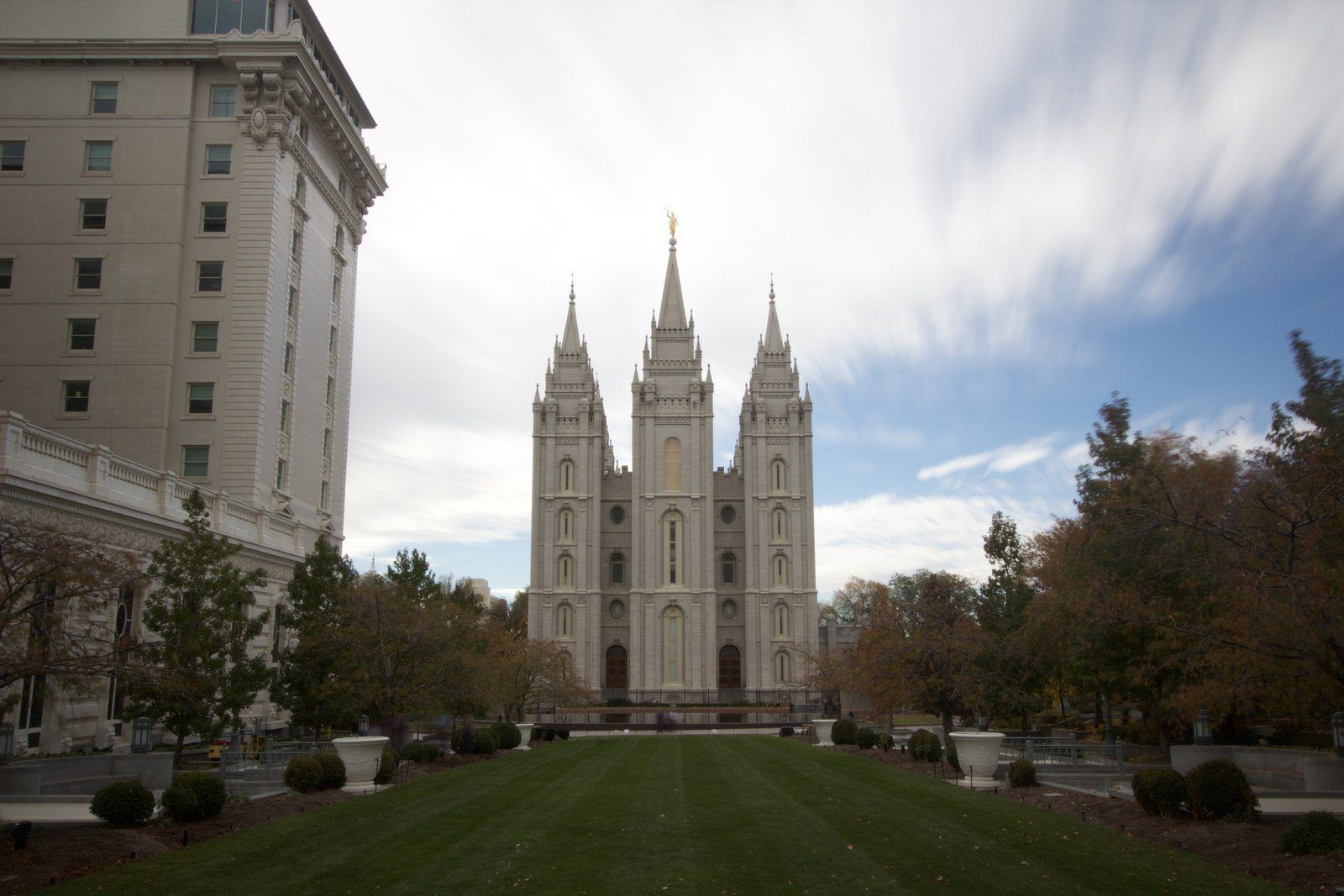
Then the payments to headquarters were gathered into one stream. In 1982 the First Presidency ended local building fundraising and paid for all meetinghouses from a general fund “mostly financed by members’ tithes and offerings” (church history topics, documented; HM Q9). In November 1989 the First Presidency of Benson, Hinckley and Monson ended ward and stake budget assessments. From 1 January 1990, every local unit budget came from Salt Lake City (Church News, documented; HM Q9). Monson explained it in April 1990 as a kindness: steps “to relieve the membership of financial burdens which some simply could not carry” (documented; HM Q9).
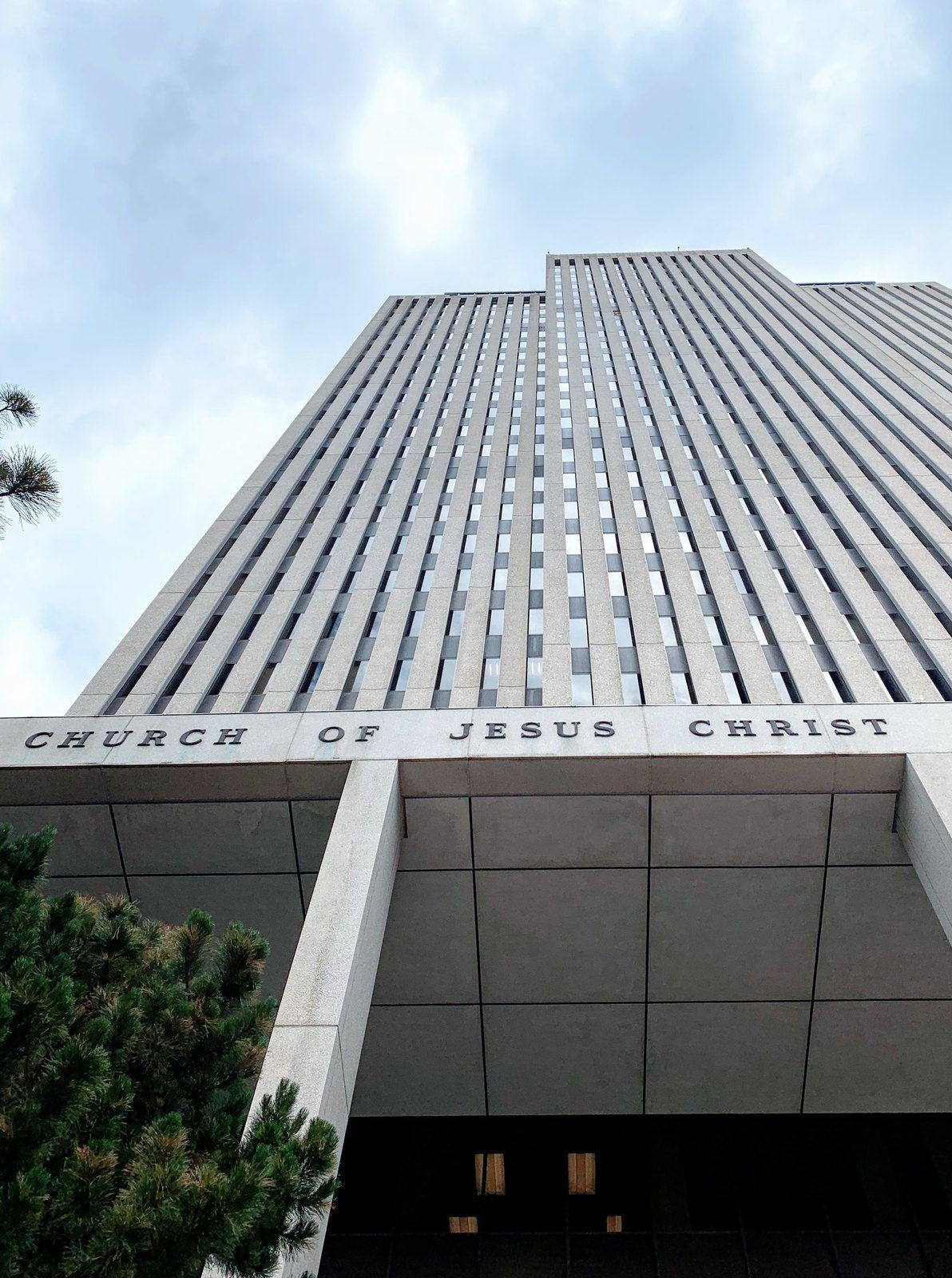
Reading. The change was a kindness, and it was also a pipe. From 1990, every dollar a member gave passed through headquarters, and the wards held nothing of their own. The Maharishi essay found an inner ring that asked much of a few. The Western third built something subtler: a light threshold for the many, and a single ledger behind it that only the few could read.
VI. The relay: a god who is silent, and the men who speak for him
Rajneesh fell silent in Oregon for more than three years and spoke through one secretary, Sheela. In the fall of 1983 she announced that he would speak only with her. Maharishi in his last years spoke to the world by video, and when he fell gravely ill in 1991, Chopra says, the organization around his nephews insisted that no one in the movement should find out. The Western third did not need to invent this arrangement. The church’s own succession produced it, again and again, and Hinckley lived inside it longer than anyone.
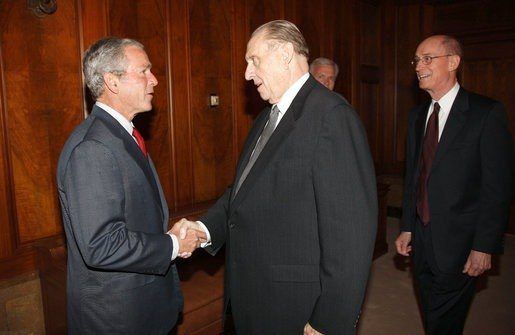
Documented. On 23 July 1981, Hinckley was set apart as an extra counselor to Spencer W. Kimball, because both of Kimball’s counselors were ill (Ensign, 2008; HM Q8). By mid-1982, in Dew’s words, “the day-to-day responsibilities of the First Presidency had shifted almost entirely to President Hinckley.” A First Presidency staffer told Quinn: “President Kimball was not lucid, and so President Hinckley in fact was carrying the full burden” (Quinn; HM Q8). In October 1985 Hinckley told the priesthood that “we consult with him on all decisions of importance, and we will not proceed with any such without his consent and approval.” That same month, by Dew’s own account, the nurses thought Kimball “may be failing.”
Then Ezra Taft Benson. On 23 May 1989, two “Certificates of Authority” gave Hinckley and Monson power of attorney over the Corporation of the President, “which shall not be affected by [Benson’s] disability or incompetence.” Benson’s signature on them was produced by a signature machine, and the documents were filed with the State of Utah (Quinn, citing Utah corporation file 016041; Salt Lake Tribune, 15 August 1993; HM Q8). An identical Benson signature appears on a similar document of February 1993, also filed with the state (Quinn; HM Q8). By 1993 the Washington Post reported that Benson had been “incapacitated since 1989,” and called Hinckley the “de facto leader” (credibly reported). Benson’s grandson, Steve Benson, called the public image of his grandfather a “charade” (credibly reported).
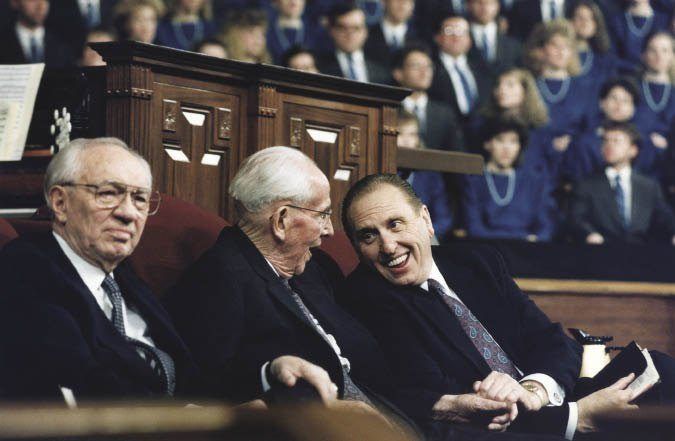
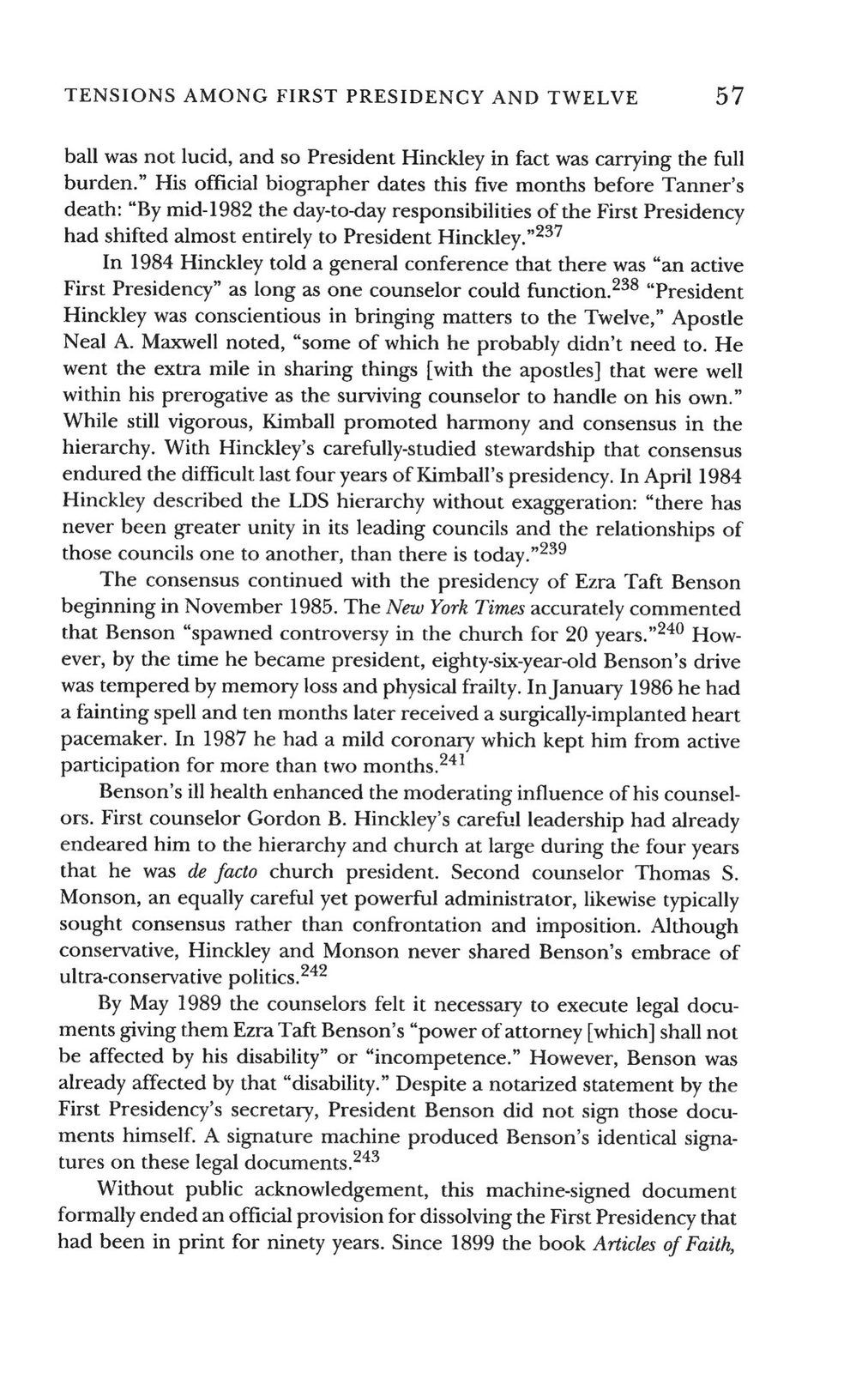
Hinckley answered in April 1994, in “God Is at the Helm.” When the president cannot function, he said, his two counselors “together comprise a Quorum of the First Presidency” and “carry on with the day-to-day work of the Presidency” (documented). There is the phrase again. Day-to-day. His account of the signatures should stand beside Quinn’s. Hinckley said that Benson, after he was set apart in 1985, “signed with his own hand powers of agency giving each of his Counselors the authority to direct the business of the Church” (documented; HM Q8). Reading. The two accounts need not contradict each other. The hand signed in 1985, while Benson was well. The machine signed in 1989, when he was not.
Then Monson’s own turn. In November 2015 the church issued its policy on the children of same-sex couples. In January 2016 Russell M. Nelson told young adults that “the Lord inspired His prophet, President Thomas S. Monson, to declare the mind of the Lord and the will of the Lord” (documented; HM Q14). Sixteen months later, in May 2017, the church said Monson was “no longer attending meetings at the church offices on a regular basis” because of “limitations incident to his age” (credibly reported, official statement; HM Q14). The policy was reversed in April 2019, after his death (documented).
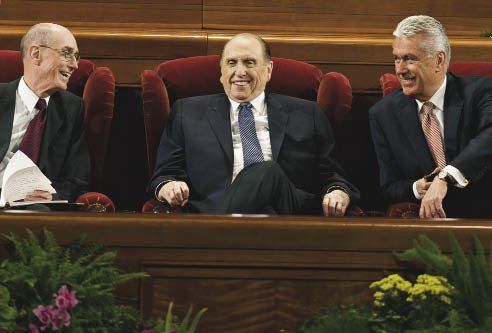
Reading. Sheela was one woman, chosen by her guru, and the arrangement ended in crime. The Mormon relay was a constitutional habit, and it ended in nothing worse than paperwork. But the shape is the same. A silent figure at the top. A voice beside him saying he has been consulted. And a man who, in his authorized biographer’s words, “for nearly fourteen years ... had sat at the side of three Church Presidents” and “had shouldered increased responsibility as each in turn had experienced the frailties of advancing age” (Dew), before he became the figure himself.
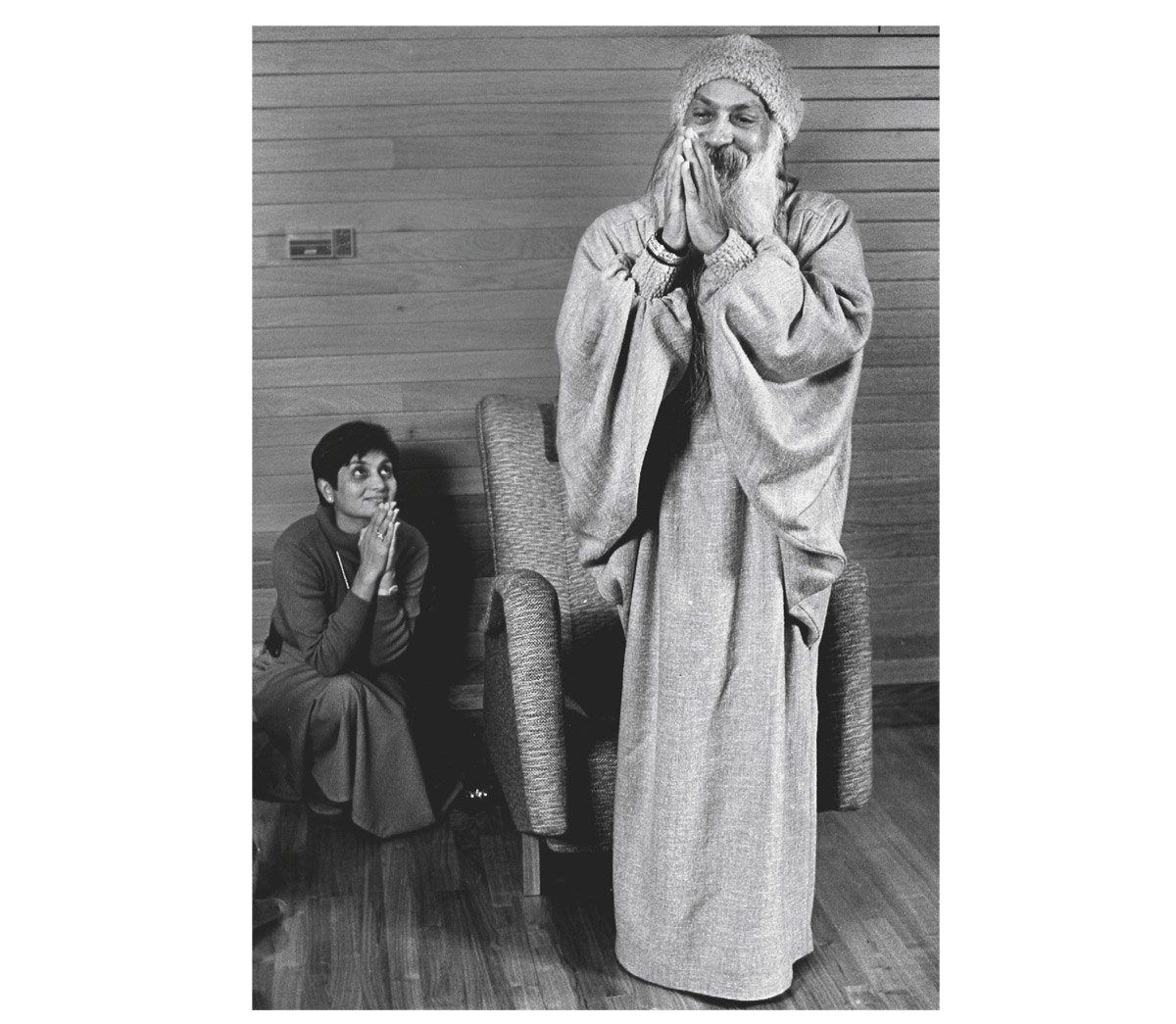
Hinckley was Sheela before he was Rajneesh. That is the strangest fact in this comparison, and the most Western. The East needed two different people to play intermediary and god. The West ran both roles through the same man, in sequence, by seniority.
And the signature machine is the perfect emblem. It produces the prophet’s mark without the prophet’s hand. Baudrillard’s second phase of the image “masks and denatures a profound reality.” His third “masks the absence of a profound reality.” A machine-signed certificate, filed with the state, for a president the press would soon call incapacitated, is the third phase in brass and ink.
VII. The costume: the archive and the statistic
Maharishi dressed the mystical in the laboratory. Rajneesh dressed it in the therapy room. The Western pair had their own costumes. Hinckley’s was the historical document. Monson’s was the number.
Hinckley’s costume tore in public, and the tearing is one of the best-documented stories in the archive.
Documented. In January 1983 Hinckley personally bought a letter from the document dealer Mark Hofmann, supposedly by Joseph Smith to Josiah Stowell, about treasure-digging. He paid $15,000, had Hofmann agree to tell no one, and put the letter in the First Presidency’s vault (Quinn chronology; BYU Studies chronology; Oaks, Ensign 1987; HM Q10). When the press asked about it in April 1985, a church spokesman denied the church had it. He retracted on 5 May, “saying he was informed by President Hinckley that the letter was in First Presidency vault” (BYU Studies chronology, credibly reported; HM Q10). The church acquired forty-eight items from Hofmann directly, by purchase, donation or trade, plus the Salamander letter (Ostling; the church’s own 1986 list; HM Q10). A former church archivist testified that Hinckley and Boyd K. Packer often approved the purchases (credibly reported, via the Tanners; HM Q10). In October 1985 Hofmann’s bombs killed Steven Christensen and Kathy Sheets. In January 1987 he pleaded guilty, and admitted forging both the Stowell and Salamander letters (documented).
The Maharishi essay has a scene that belongs here. When Lennon left Rishikesh, Maharishi asked why. Lennon answered: “Well, you’re supposed to be the mystic. You should know.” Hinckley, like every member of the First Presidency and the Twelve, was sustained as a “prophet, seer, and revelator.” Across five years a forger placed forty-eight documents with the church, among them forgeries its own leaders approved buying. The forgeries fooled outside examiners too. Of the Salamander letter the church said in April 1985 that “we accept the judgment of the examiner that there is no indication that it is a forgery” (as Oaks quoted it in 1987; HM Q10). The seer bought one himself, locked it in a vault, and let a spokesman deny it existed. You’re supposed to be the seer.
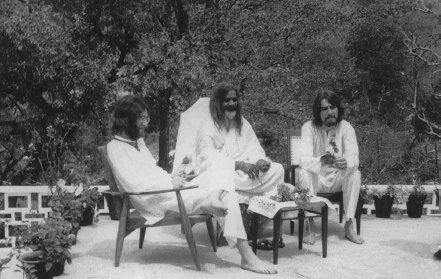
Hinckley had stated his rule for facts in October 1983, in the middle of the purchases: “I do not fear truth. I welcome it. But I wish all of my facts in their proper context, with emphasis on those elements which explain the great growth and power of this organization” (documented; HM Q15). That is a publicist’s rule. It is the filmstrip that shows a favorable image of Salt Lake City, applied to the whole of history.
Monson’s costume was quieter and never tore. It was the statistic: the hinged ward board, the count of widows visited, the number of missionaries, the report to conference. At the April 1959 conference the clerk read the church’s “statistical and financial data,” which included the names of eight new mission presidents, Monson among them. Swinton notes that it was “the first time that the name ‘President Monson’ would be placed before a general conference congregation” (Swinton). April 1959 was also the last conference at which the church gave its members a detailed financial report (Quinn; Brunson, documented; HM Q1). The title “President Monson” entered the ledger the year the ledger closed to the members.
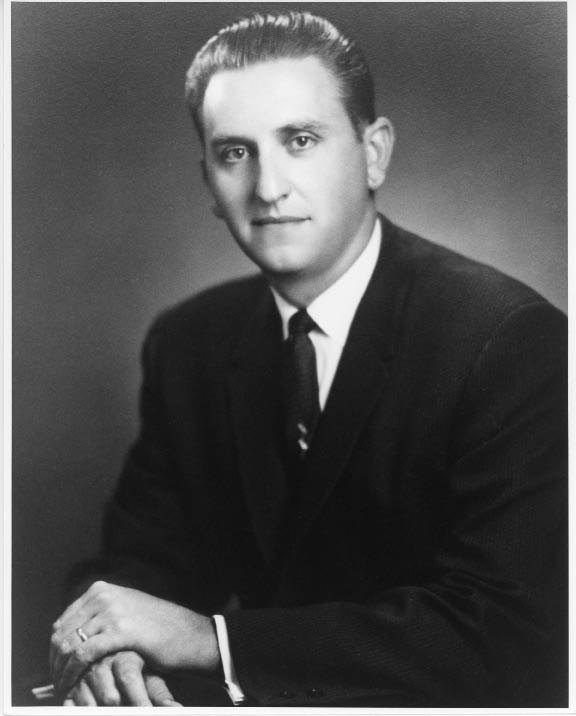
Reading. Maharishi borrowed science’s prestige without its rules of proof. Hinckley borrowed history’s prestige without its rules of evidence, and emphasized what explained growth and power. Monson borrowed the prestige of the count: numbers that showed the church working, and silence about the one number that would have shown how much it held.
VIII. Money, ownership and display
Rajneesh’s money was theatrical: ninety-three Rolls-Royces in front of his house, held by a “Rajneesh Modern Car Trust.” Maharishi’s was abstract and kept out of view: “Never, never speak about money while I’m in the room.” The Western third managed both at once. It kept the money out of view, and then built a shopping mall across the street from the temple.
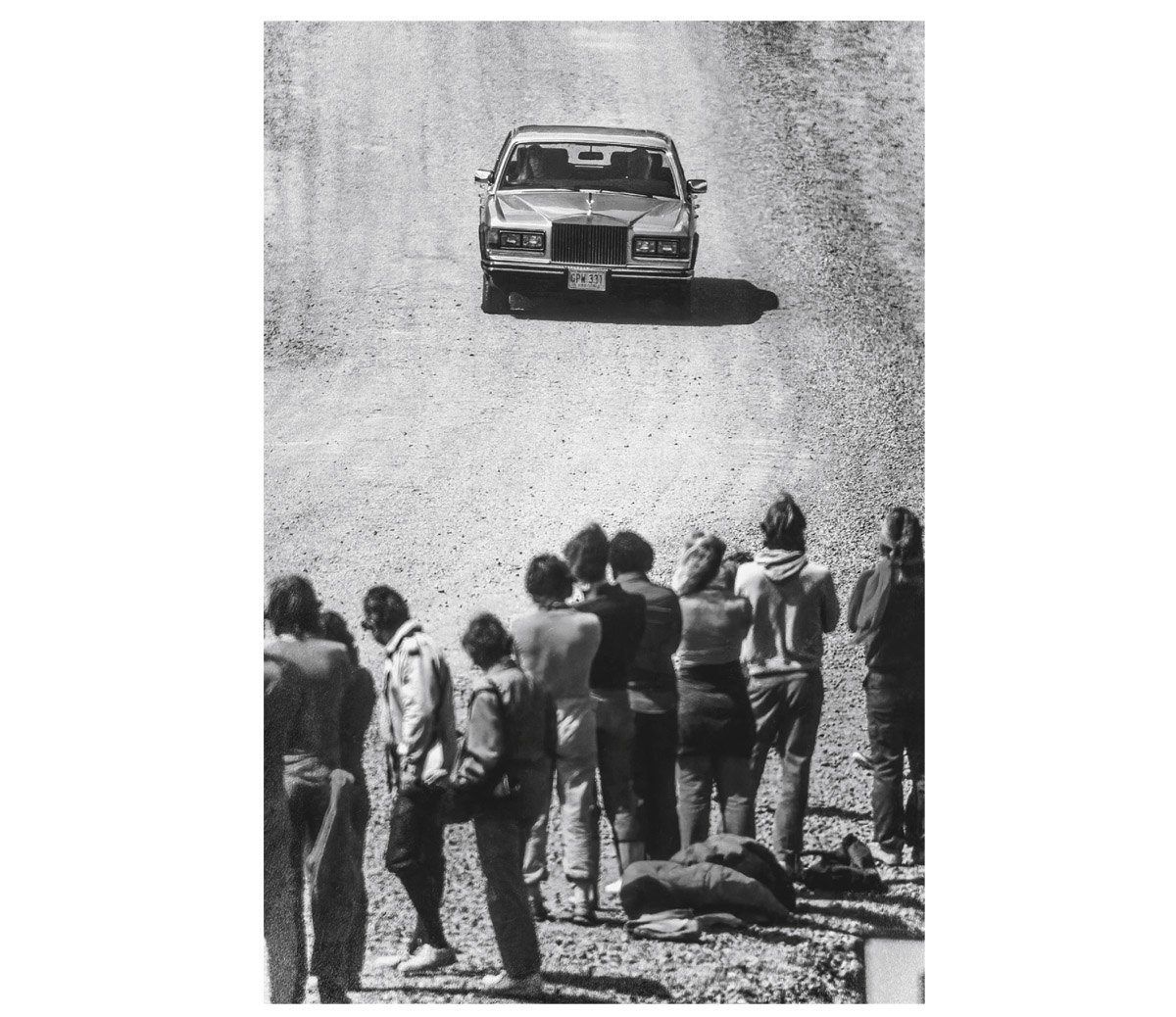
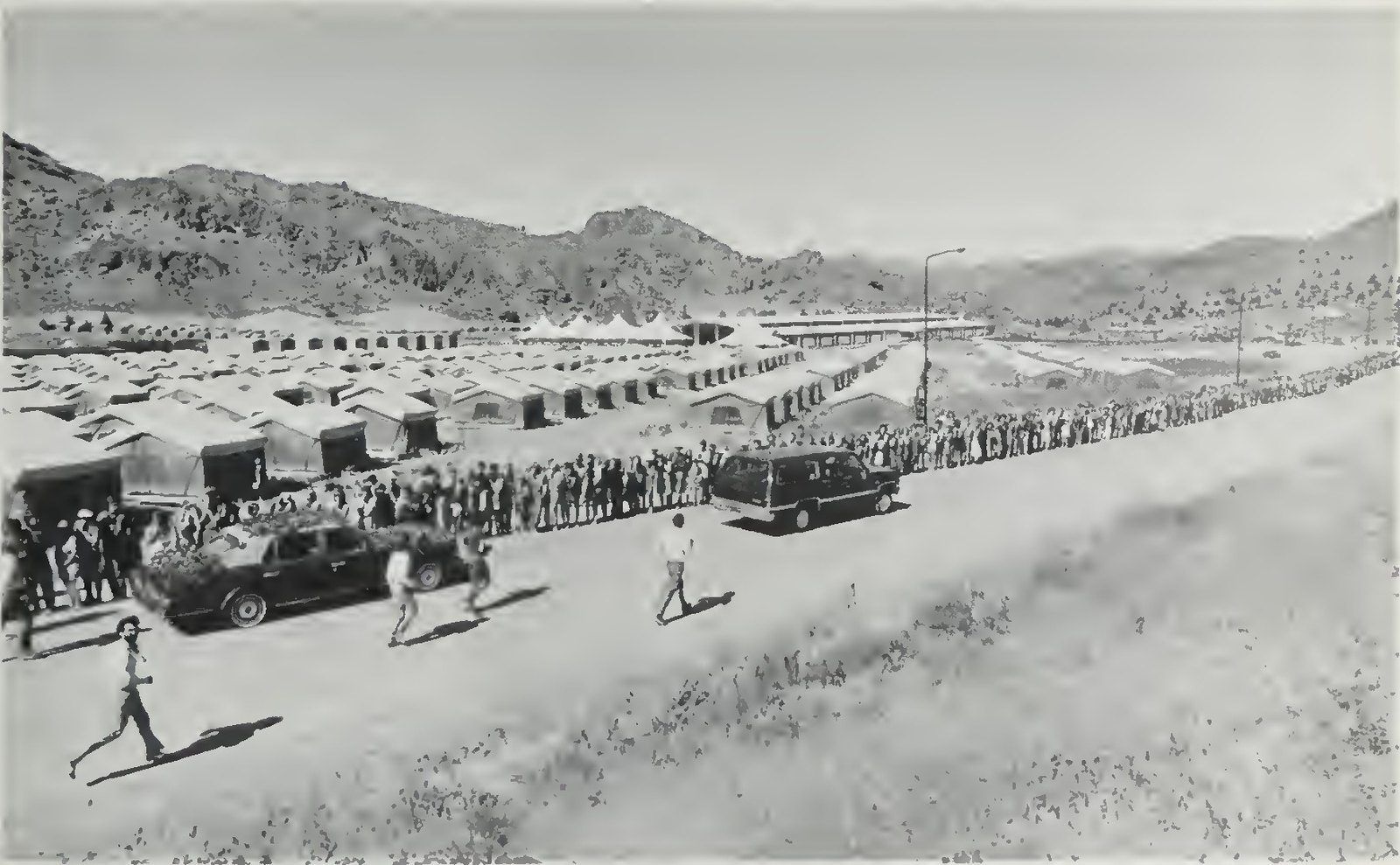
Start with the silence.
Documented. The church published its last detailed financial report to members in April 1959 (Quinn, appendix 15; HM Q1). The archive found no official reason for the cutoff, and Ostling notes that it “was never explained” (HM Q1).
Testimony, first-hand. In 1982, J. Alan Blodgett, the church’s managing director of investments, saw a proposal to publish financial statements killed in a meeting. He later wrote to Quinn: “I can only guess that Church leaders fear that individual members may not understand the vastness of Church resources and operations, and having this information might negatively influence their faithfulness and support of Church leaders. (President Monson, then a member of the Quorum of Twelve, so expressed himself once in a meeting held just prior to President Tanner’s death, putting an end to a proposal made to publish financial statements.)” (Quinn 2017, note 211, Quinn’s bracketed insertions omitted; HM Claim 1). This is an allegation, but Blodgett was in the room.
Set it beside Maharishi’s rule. Never speak about money while I’m in the room. Monson’s version, on Blodgett’s account, was gentler, and franker in private: members may not understand the vastness. The guru did not want money mentioned in his presence. The printer did not want the size of the ledger known by the people whose giving filled it.
Then the fund.
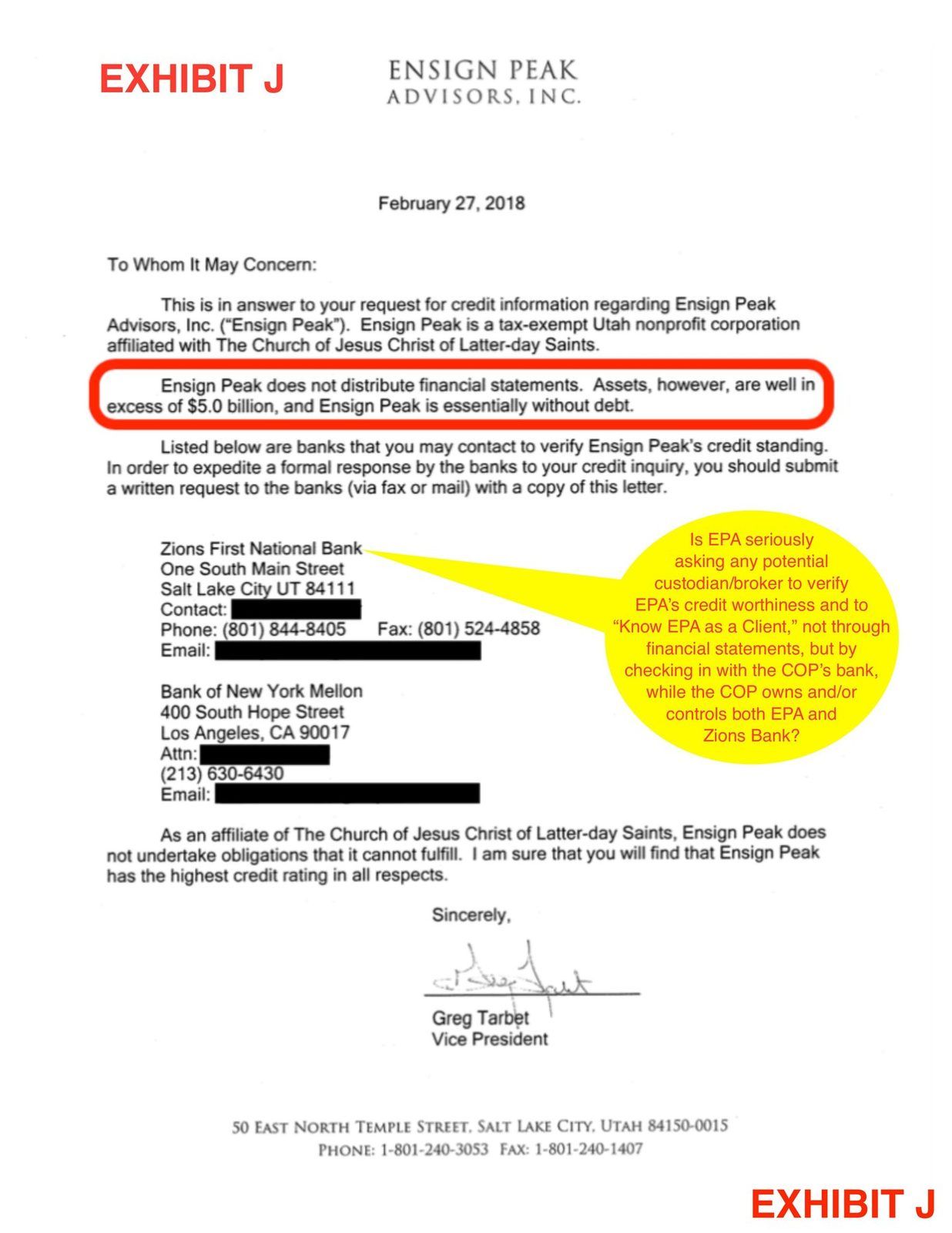
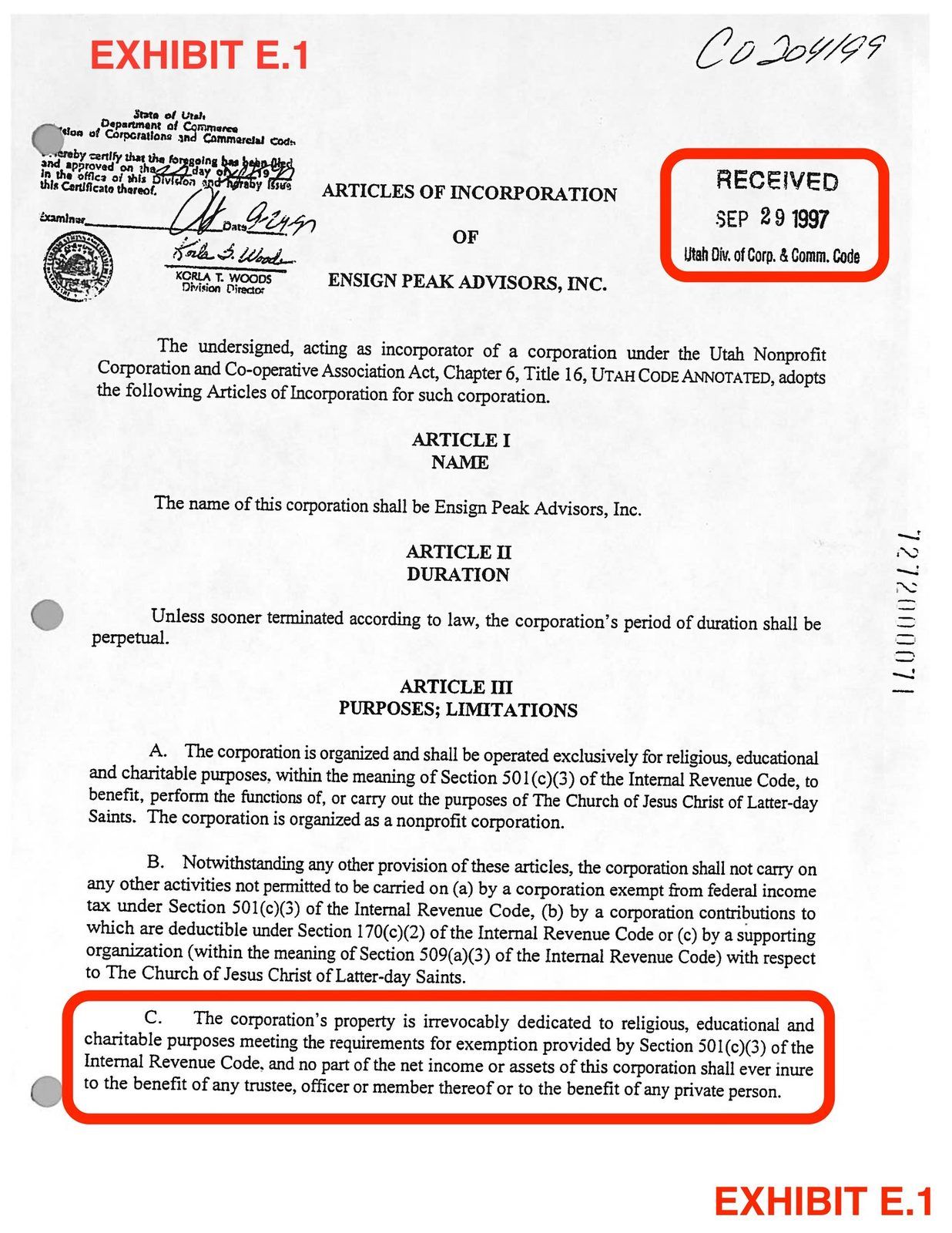
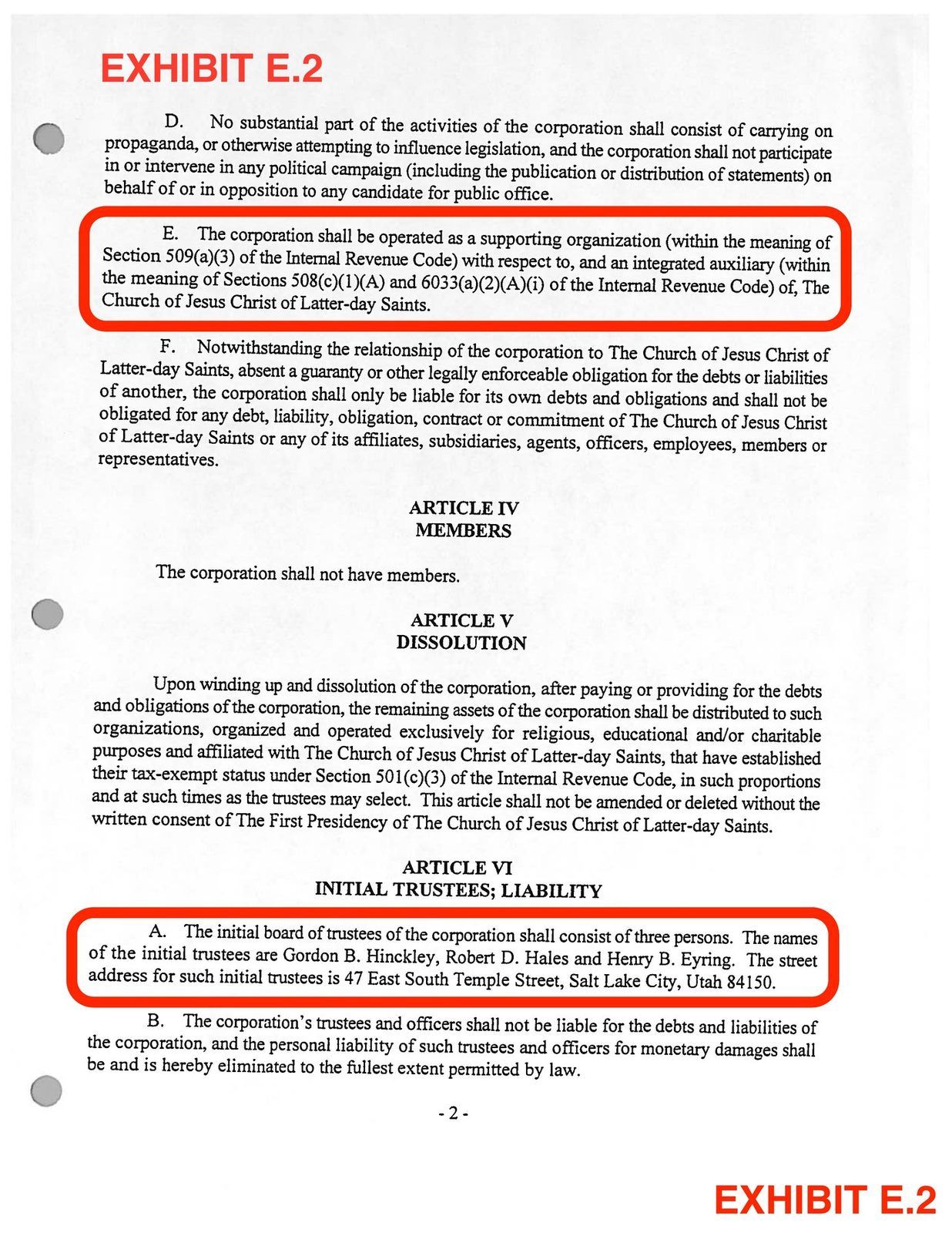
Documented. Ensign Peak Advisors was incorporated on 29 September 1997. Its initial trustees were Gordon B. Hinckley, Robert D. Hales and Henry B. Eyring (Articles of Incorporation, exhibit to the Nielsen letter; HM Q2). That was eight weeks after Time’s “Mormons, Inc.” cover story of 4 August 1997; the Nielsen letter calls it “one reactionary month after.” At its start it managed about $7 billion (SEC order).
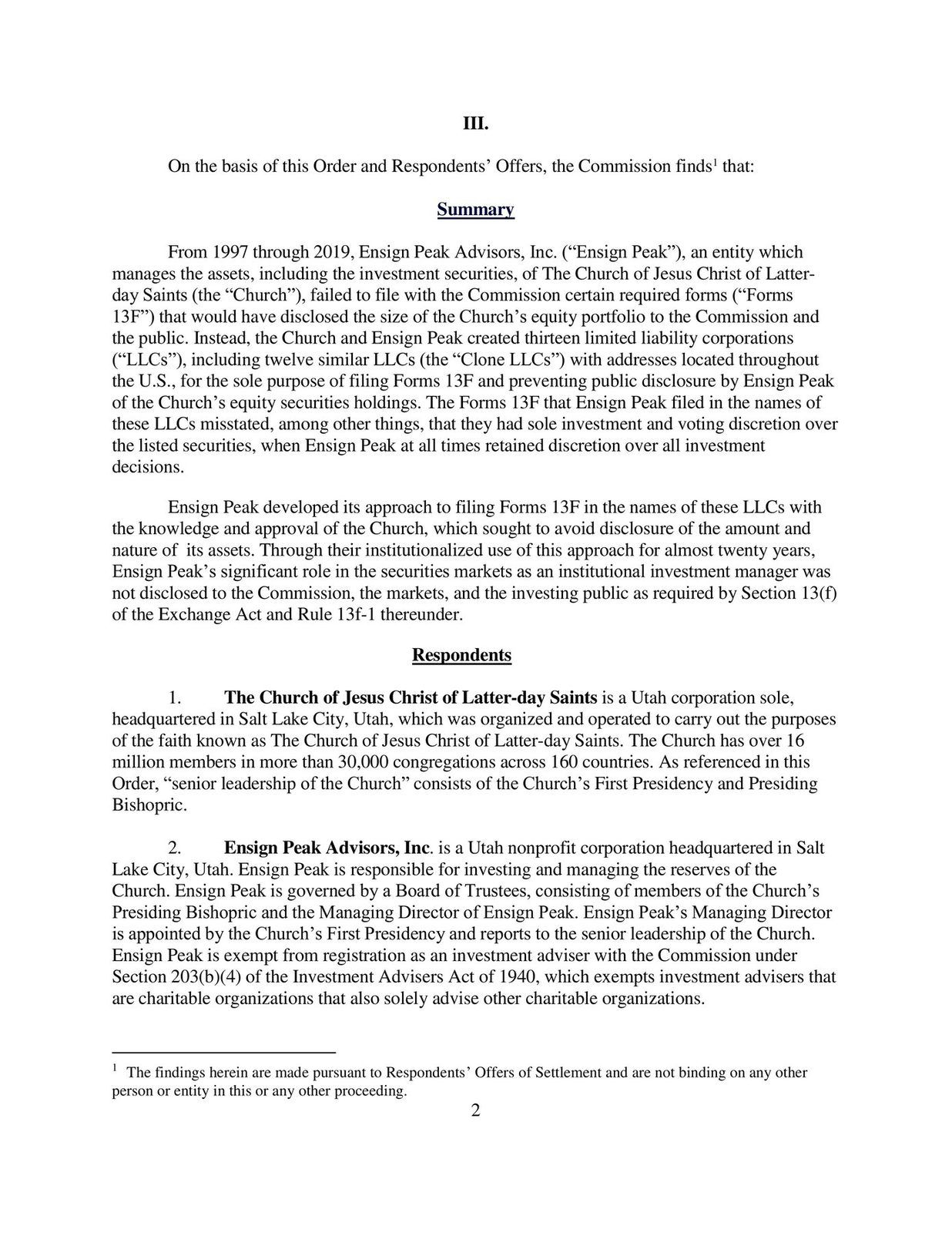
The SEC found in 2023 that “from 1997 through 2019” Ensign Peak failed to file the forms that “would have disclosed the size of the Church’s equity portfolio to the Commission and the public.” Instead, “the Church and Ensign Peak created thirteen limited liability corporations ... for the sole purpose of filing Forms 13F and preventing public disclosure.” The first was created in 2001, and “Senior leadership of the Church approved the creation of the first LLC.” The church “was concerned that disclosure of the assets in the name of Ensign Peak, a known Church affiliate, would lead to negative consequences in light of the size of the Church’s portfolio. Ensign Peak did not have the authority to implement this approach without the approval of the Church’s First Presidency.” A 2005 approval asked for “better care being taken to ensure that neither the ‘Street’ nor the media [could] connect the new entity to Ensign Peak.” The business managers who signed the filings “were selected because they had common names and a limited presence on social media” (SEC Release 34-96951, documented; HM Q4). Penalties: $4 million for Ensign Peak, $1 million for the church.
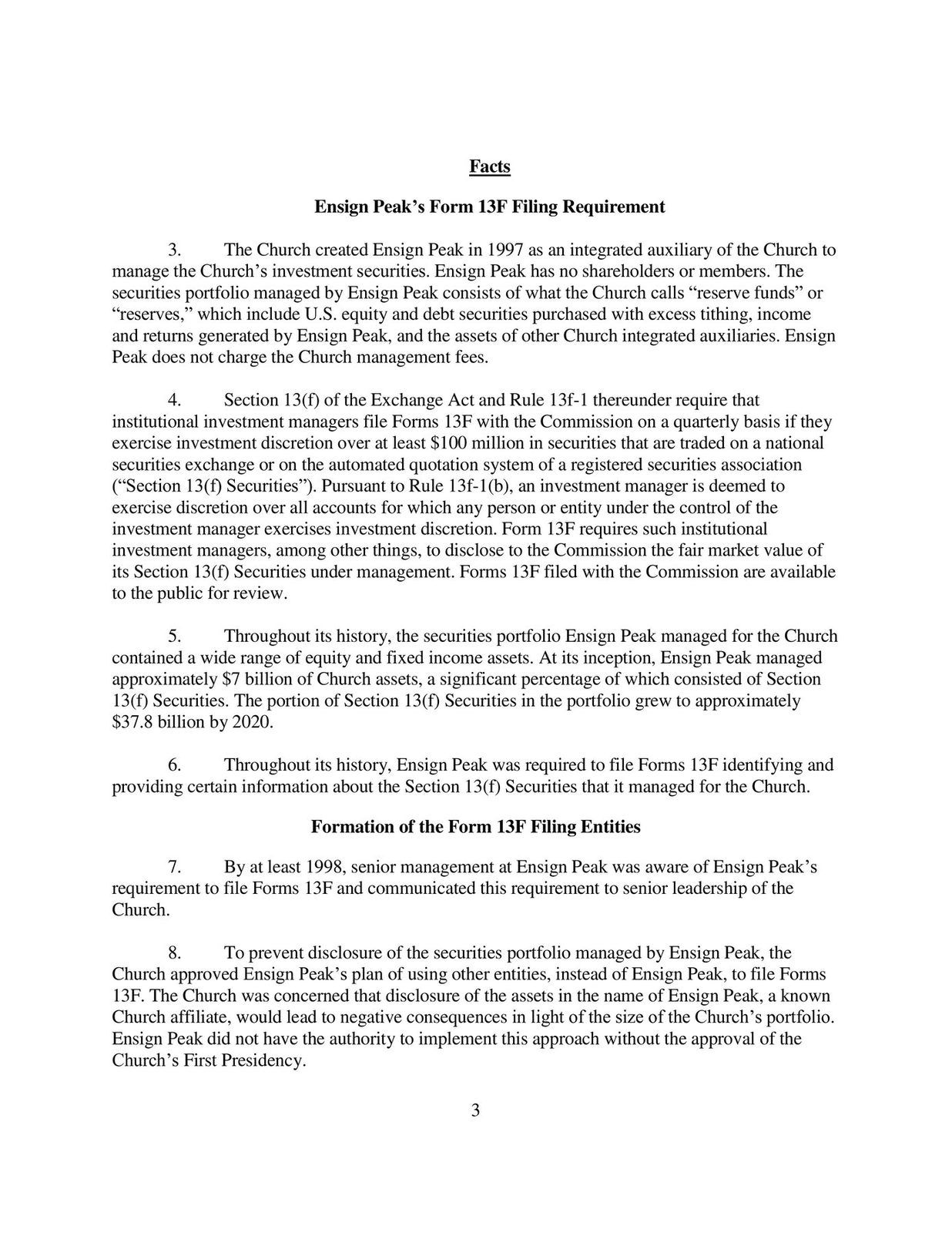
Inference, marked. The order names no individual. But it says First Presidency approval was required, and unanimity was required to change the structure. The 2001 and 2005 approvals fell inside Hinckley’s presidency, with Monson as his counselor. The 2011 and 2015 approvals fell inside Monson’s. A unanimous First Presidency could not have approved without them (HM Claim 1).
Then the display.
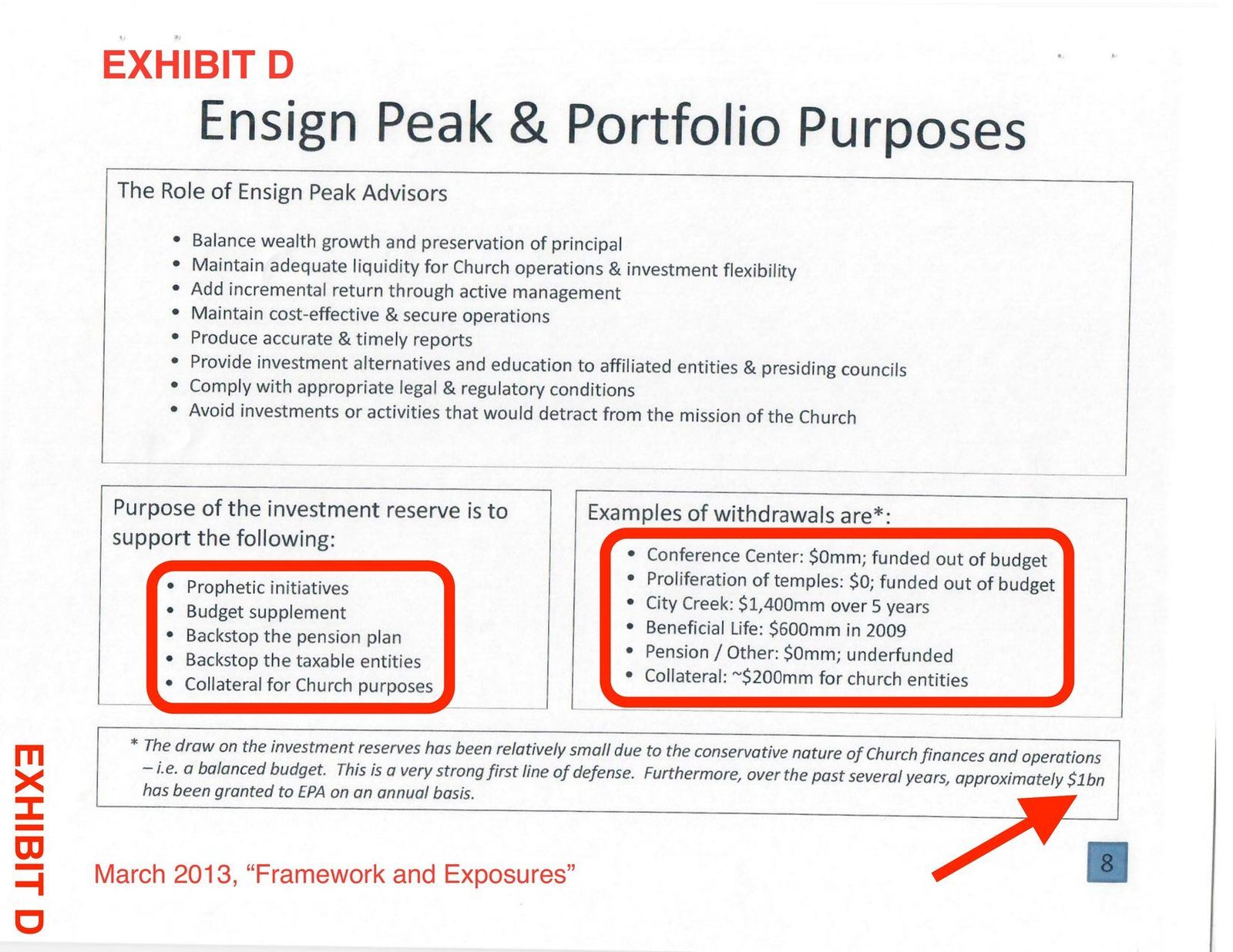
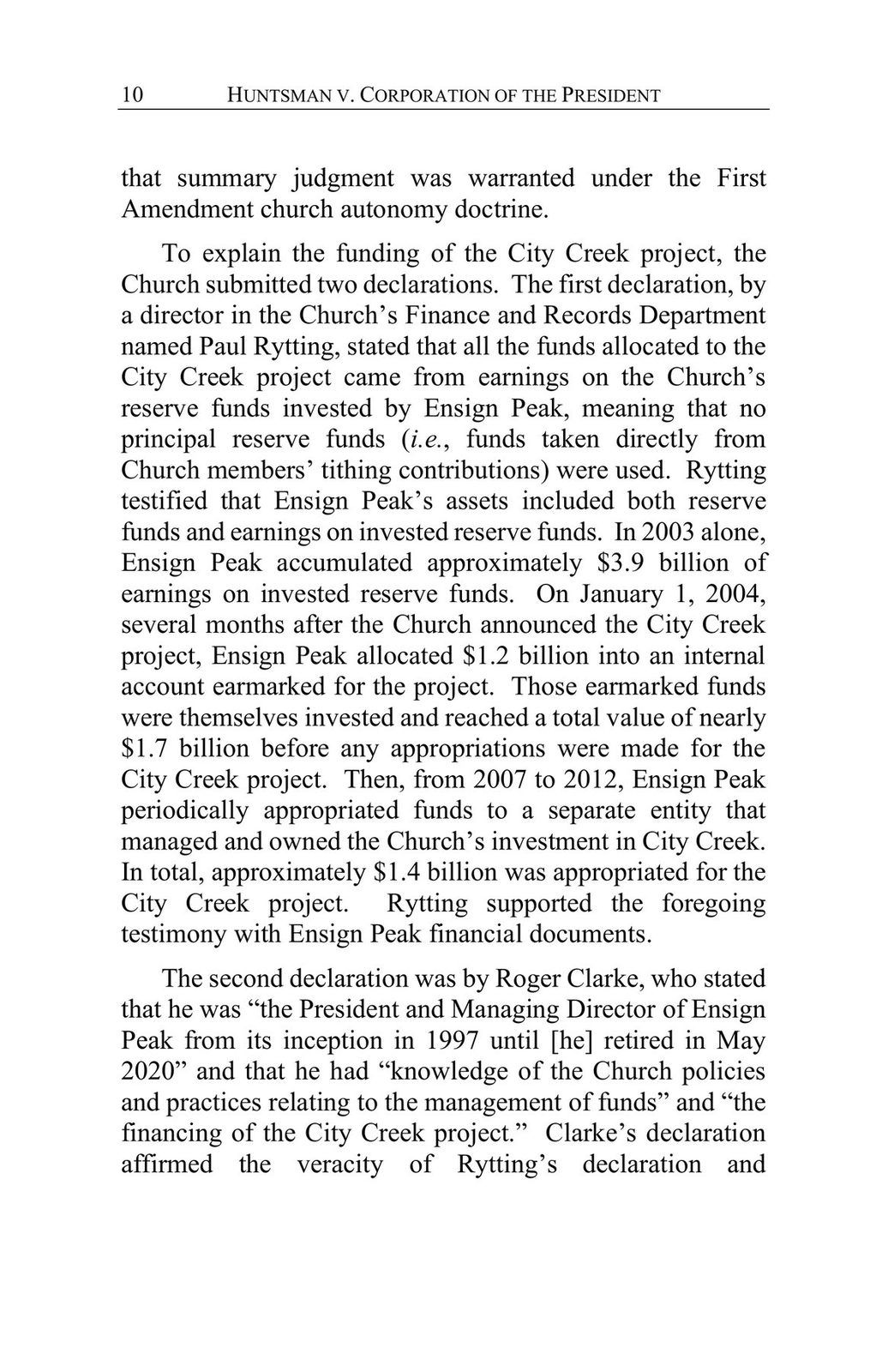
Documented. In April 2003 Hinckley told the whole church that “tithing funds have not and will not be used” to acquire or develop the downtown property that became City Creek Center. Funds would come “from the commercial entities owned by the Church” and “the earnings of invested reserve funds.” In October 2004 he said it again, more simply: “Tithing funds will not be used for this construction” (documented; HM Q5). The church’s own sworn declaration, recited by the Ninth Circuit sitting en banc in January 2025, says the project money came from Ensign Peak: $1.2 billion set aside on 1 January 2004, about $1.4 billion spent in all (documented; HM Q5). The Nielsen letter says those checks came from Ensign Peak’s account of never-invested tithing. The church says they came from earnings on reserves. The en banc court accepted the earnings framing as undisputed and rejected the fraud claim (documented). Both of those facts should stand together.

City Creek opened on 22 March 2012. Monson was on stage. The crowd cheered “Let’s go shopping!” The local report says the cheer was led by the developer, Robert Taubman, with Monson beside him. Some later accounts put the line in Monson’s mouth, and the archive’s rule is not to do that without video (KSL; credibly reported; HM Q5).
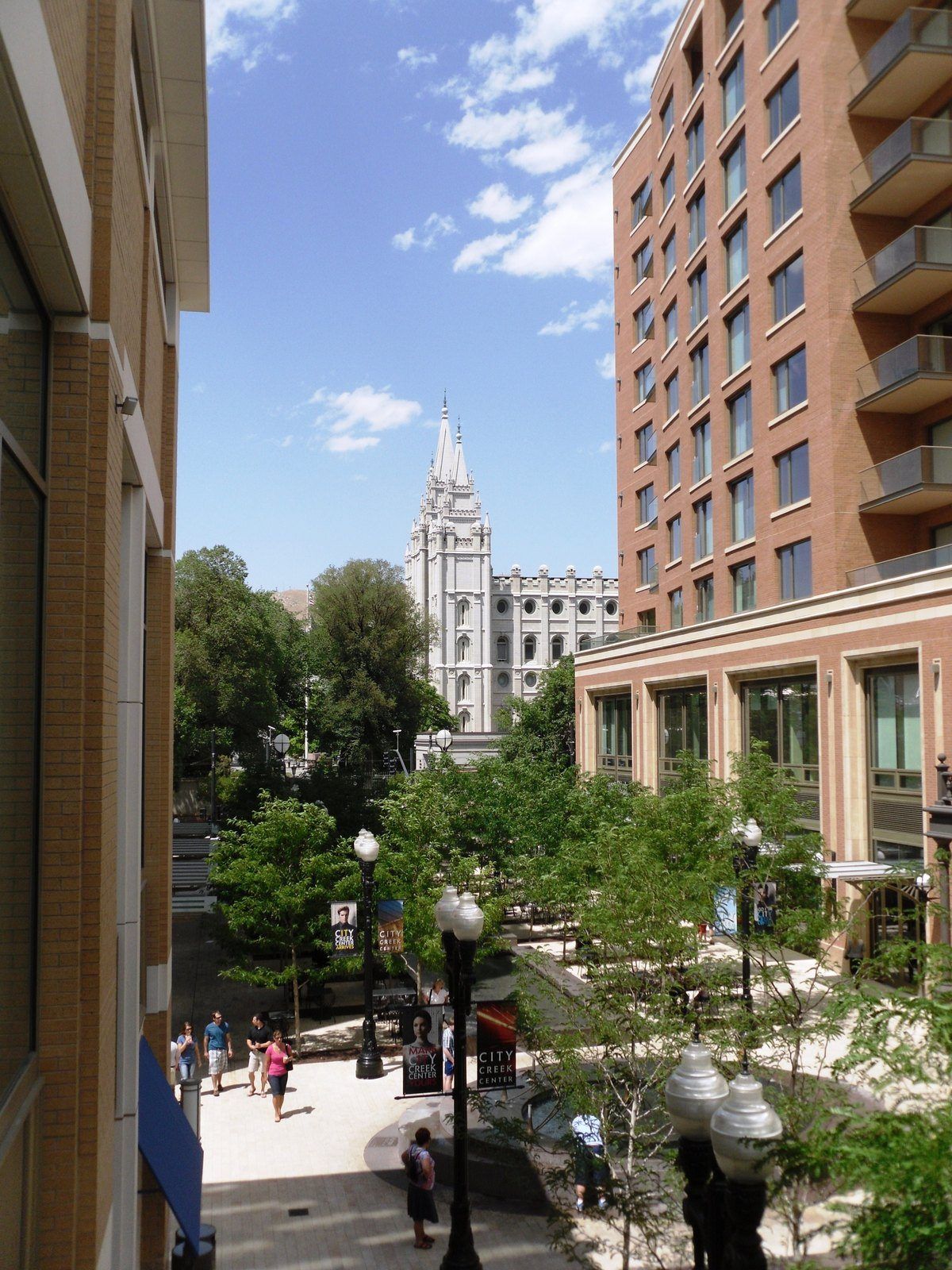
Reading. Rajneesh’s biographer, James Gordon, read the cars several ways, among them as a provocation aimed at America’s puritans and a lampoon of the far greater wealth of the Pope. A disciple reported Rajneesh saying privately that while people’s mouths were open he could “shove in the truth.” City Creek was no provocation. It was the simulacrum of an ordinary downtown, built by a church across the street from its temple; the Nielsen letter calls it “the opulent City Creek Mall.” But the gesture underneath is the same. Abundance is displayed as a sign that the system works, while the source of the abundance stays out of view.
And here the West has one move the East lacked. Rajneesh’s cars belonged to a trust. Maharishi held no property in his own name. The Latter-day Saint president also owns nothing. But one of the church’s main legal bodies is called the Corporation of the President. The man and the money are formally apart, and the money is named after the man’s chair. Ernst Kantorowicz called this arrangement the king’s two bodies: a natural body that ages and weeps, and a corporate body that never dies. The archive does not yet hold Kantorowicz, so take this as a pointer. At Timpanogos the natural body wept. At City Creek the corporate body went shopping.
IX. Sexuality and moral authority
Here the comparison has to be honest about what it does not find. Maharishi is credibly accused, by a woman who says she was his lover and by an attendant who saw her come and go, of breaking the celibacy he preached. Rajneesh is accused by several women of sexual acts in private that were kept secret. The archive holds no credible allegation of personal sexual misconduct against Hinckley or Monson, and this essay makes none.
What the record shows is moral authority exercised on other people. In September 1995 Hinckley read out the Proclamation on the Family, issued in the name of the First Presidency and the Twelve (documented; HM Q14; Dew). In 2008 Monson’s First Presidency sent the letter asking members in California to give means and time for Proposition 8. In 2010 the church settled with California’s Fair Political Practices Commission, which found it had “failed to timely report making late non-monetary contributions totaling $36,928” in that election, for a fine of $5,539 (documented; HM Q14). In November 2015 came the policy on the children of same-sex couples, attributed to Monson’s inspiration, and reversed in 2019 (documented; HM Q14).
Reading. The Maharishi essay drew a useful line. Maharishi’s betrayed followers had a standard to appeal to: the celibacy he professed. Rajneesh’s had none, because his teaching excused the conduct in advance. The Western third kept the body clean, so the broken vow has to be looked for elsewhere. It is in the money.
Monson told the priesthood in October 2008, in his first year as president: “The financial affairs of the Church are being managed in this manner, for we are aware that your tithing and other contributions have not come without sacrifice and are sacred funds” (documented; HM Q1). That sentence is the Western equivalent of the celibacy vow. It is the standard a betrayed member can appeal to. And the shell companies that hid those sacred funds were approved, by the SEC’s account, by the First Presidency he sat in before he led it, and re-approved in his presidency. McCutchan wrote of Maharishi that he was “urging us to be celibate at the same time as he was breaking his own vows.” The Western version runs: telling us our tithing was sacred while hiding how much of it there was.
X. Politics and sovereignty
Maharishi founded a ceremonial “Global Country of World Peace,” printed a currency and crowned a ruler. Rajneesh’s commune incorporated a city, took over a neighboring town, built a Peace Force and an arsenal, and bused in homeless people in a move widely seen as an attempt to sway an election. The Western third had no arsenal and needed none. It had an older sovereignty to draw on, the theocratic Deseret of the nineteenth century, and in this period it governed in the modern way, with files.
Documented. On 22 August 1992 the First Presidency of Benson, Hinckley and Monson confirmed the Strengthening Church Members Committee, citing scripture as its mandate (Church News; HM Q12). Inference, marked. With Benson incapacitated, that First Presidency was in practice Hinckley and Monson (HM Q8, Q12). Credibly reported. Quinn describes the committee “maintaining files on every member of the church regarded as critical of LDS policies or as too liberal,” and furnishing information to local leaders before discipline (Quinn 1997; HM Q12). In September 1993 six scholars and feminists were disciplined, the so-called September Six (HM Q11). In 1979, Leonard Arrington said, two BYU students had been arranged to report weekly on his teaching (Ostling, citing Arrington; HM Q11).
The church also moved its members as a political body. It did so against the Equal Rights Amendment in the 1970s and 80s, for California’s Proposition 22 in the 1999–2000 campaign and Proposition 8 in 2008, and in its letters directing fundraising (documented; HM Q14).
Reading. Rajneesh’s commune exercised police power over real neighbors, and the Maharishi essay was right to call that decisive. The Western third’s sovereignty was of another kind, closer to Maharishi’s: ceremony, money and titles, plus one thing neither Eastern teacher had at scale. It had a record on every member. The temple recommend is a passport. The membership record is a census. The disciplinary council is a court. Rajneeshpuram’s Peace Force carried guns. The Western third carried the file.
XI. Under pressure
The Maharishi essay found a split under pressure. Maharishi deflected outsiders and disciplined insiders. Rajneesh attacked, accused his own secretary, and changed roles faster than anyone could follow. Hinckley under pressure did something new. He joined himself to the victim at the center of his own religion.
Documented. After the Hofmann bombings, Hinckley said, as Dew gives it: “I am not ashamed to admit that we were victimized. It is not the first time the Church has found itself in such a position. Joseph Smith was victimized again and again. The Savior was victimized.”
Reading. Rajneesh, cornered, said “Adolf Hitler has died again” and named Sheela as the criminal. Maharishi, cornered, blamed the world’s “criminal atmosphere.” Hinckley, cornered by a forger, placed his church in a line that runs through Joseph Smith to Christ. Three men, cornered. Only one reached for the crucifixion. This is the god-man move in miniature. In defeat, the office does not shrink. It grows toward the sacred.
Documented. In early 2014 a British former member, Tom Phillips, obtained fraud summonses against Monson in London over church teachings used to obtain tithing. They were withdrawn as “an abuse of the process of the court” (documented; HM Q15). Monson never had to answer them.
And the last word under pressure came after both men were gone. When the SEC order issued in February 2023, the church said: “We affirm our commitment to comply with the law, regret mistakes made, and now consider this matter closed” (documented; HM Q4).
Rajneesh, dropping the title Bhagwan, told the press: “Enough is enough. The joke is over.” The Western third, settling with the regulator, told the press the matter was closed. One man’s closing line was a joke. The institution’s was a press release. Hinckley would have known which one plays better.
XII. What members received
A comparison built only on faults would miss why people stayed, and the Maharishi essay did not make that mistake. This one should not either.
The members got a great deal. They got wards that are real communities, a welfare system, missions that shaped young lives, and a moral world with clear edges. Monson’s widows were real people, visited by a real man. Swinton names them: Zella Thomas, Elizabeth Keachie, Nel Ivory, Nettie Woodbury. One of them used to call ahead to the next house on “his route” to say, “He’s coming. He just left my home” (Swinton). Nothing in this essay takes that away. Kindness at the doorstep and concealment at headquarters can live in one man. The Maharishi essay found the same mix in its teachers: the happiest man Shumsky ever met, who also cut her off before hundreds of his teachers.
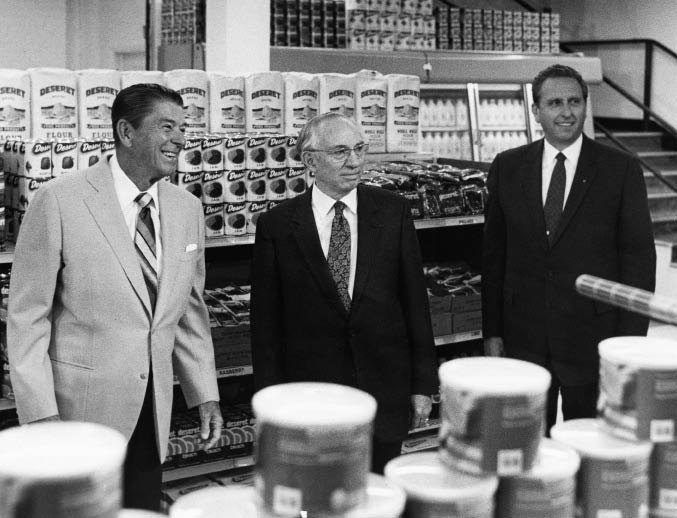
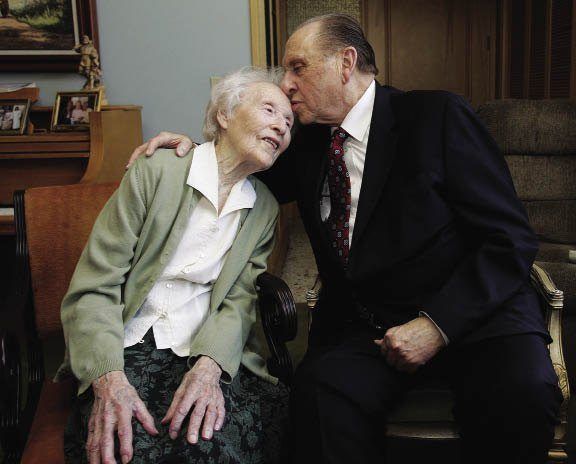
What did members give? Labor and time, a tenth of their income, and their trust that the tenth was being spent as they were told. They learned what it had become from the MormonLeaks and Truth and Transparency disclosure in 2018, a whistleblower in 2019 and a regulator in 2023. None of those was the pulpit.
Reading. Most of Maharishi’s meditators paid a fee, meditated forty minutes a day, and went home. Most of Rajneesh’s sannyasins gave their names and working lives. Faithful Latter-day Saints were asked for something between the two: not their names, but a tenth of everything, for life. A meditator who stopped paying kept what he had learned. A member who stopped paying lost the temple recommend, and with it the door to the temple, where families are sealed. The ledger held the price of the door.
XIII. Last acts and succession: the actuarial prophet
One of the Eastern teachers and one of the Western pair died nine days apart. Hinckley died on 27 January 2008. Maharishi died at Vlodrop on 5 February 2008. Rajneesh had gone long before, in January 1990. Two of the great soft-spoken religious executives of the century left within a fortnight of each other.
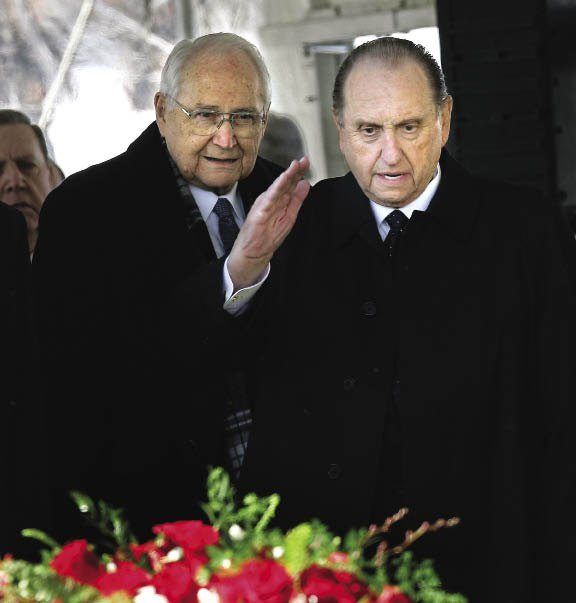
Succession shows the three apprenticeships one last time. Maharishi, the disciple who could not inherit his master’s seat, left a crowned ruler and many trained administrators, but no designated heir. Rajneesh, who had no master and accepted no successor, left an epitaph, a joke and a new name. The Western third needed no designation at all. On 3 February 2008, Monson became president, because he was the senior apostle (documented; HM timeline).
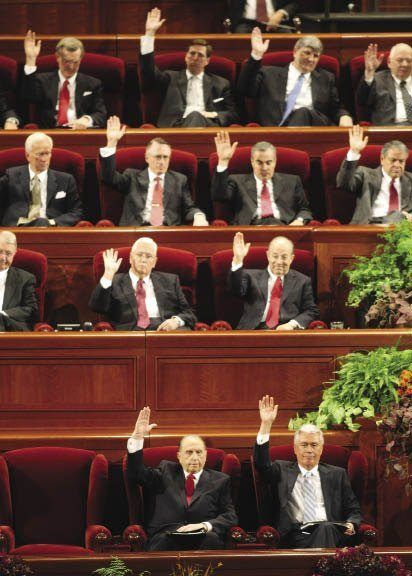
In October 2008 he described the arithmetic himself: “As the junior member of the Twelve then, I looked up to 14 exceptional men, who were senior to me in the Twelve and the First Presidency. One by one, each of these men has returned home. When President Hinckley passed away eight months ago, I realized that I had become the senior Apostle” (Swinton). The order had been set in 1963. At thirty-six, Monson was “the youngest man called to the apostleship in fifty-three years,” seventeen years younger than the next youngest, Hinckley, who had been called two years before him (Swinton). And at the reorganization of March 1995 it was Monson who ordained Hinckley the fifteenth president of the church (Dew, chronology). The second line of the couplet ordained the first.
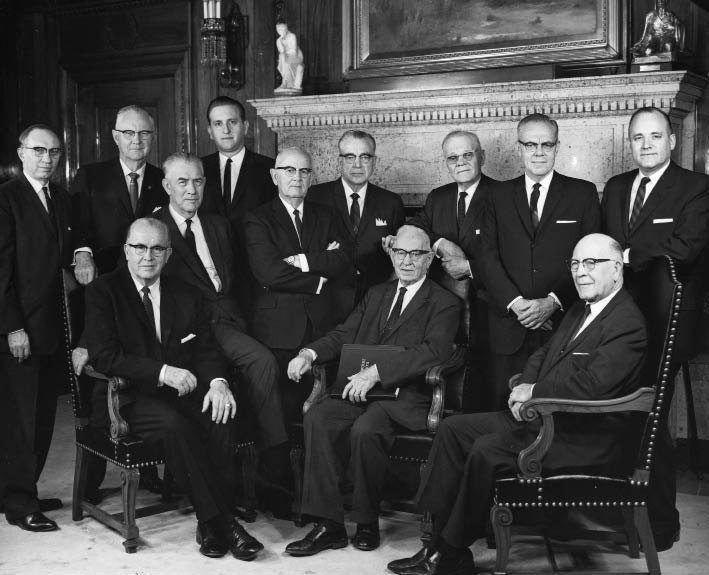
In April 1986 Hinckley called the process “beautiful in its simplicity,” and, in Dew’s paraphrase, free of electioneering. Then he said where God’s choice falls: “I give you my testimony that it is the Lord who selected Ezra Taft Benson to become a member of the Council of the Twelve almost forty-three years ago” (Dew).
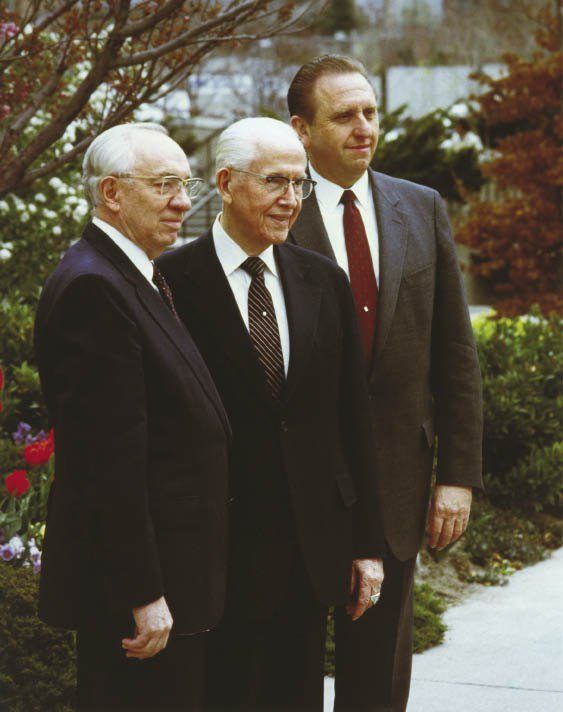
Reading. Note where Hinckley places the choice. God chose Benson as an apostle in 1943. Nothing after that needed choosing. The presidency arrived when the men ordained before him had died. Seniority among the apostles means this: the prophet is the apostle ordained earliest among those still living. God’s choice is therefore expressed as an actuarial table. The successor is not discerned. He is computed. Maharishi kept a seat he could not inherit. Rajneesh would not leave a seat at all. The Western third made the seat inherit itself, by arithmetic.
This is the kernel of the Western alternative, and the project’s working hypothesis says why it would work. If members are moved by quantification more than by argumentation, then a church that picks its prophet by date of ordination has quantified the most sacred choice it makes. It needs no argument at all. It needs a calendar.
XIV. The concept: subreption of office
The archive has a rule for work like this, and this essay has bent most of its rules but should keep that one. A list of matched parallels is an analogy, not a concept. The test: delete the source instance. If the insight survives without Hinckley and Monson, it was a concept. If it evaporates, it was only resemblance.
So here is the operation underneath the parallels, named.
Subreption of office. It is a two-way substitution carried out by an institution through its highest seat.
Upward: the respect an office-holder feels for his own station is felt, and then announced, as the presence of God. Kant’s subreption, made liturgical. Elohim is in the room.
Downward: God’s choosing is reduced to a procedure that no one has to discern. Seniority computes the prophet. A machine signs for him when he cannot. A corporation carries his title when he dies.
Either direction alone is ordinary. Kant’s subreption happens to anyone on a cliff. Succession by rule happens in any firm. The discovery is that an institution can run both at once, and that the two directions lock.
Call the lock mutual certification. The procedure certifies the feeling: a man who reached the chair by what his biographer calls “the pattern established by the Lord” (Dew) is entitled to take what he feels there as God. The feeling certifies the procedure: when the man in the chair weeps and says God is present, the arithmetic that put him there reads as sacred. And nothing outside the office is ever asked to certify either one. That last clause is the lock itself, and it is a claim about structure, not about anyone’s heart: the office is defined by needing no outside certifier. The feeling and the procedure vouch for each other, and no third party is in the room. It is also why the man can disown godhood at the press table, as a little couplet, while standing beside Elohim in the temple. The press table is outside the circuit. The temple is inside it.
Delete Hinckley and Monson and the concept survives. It describes any seniority-prophet, any corporation sole, any office whose feelings are taken as God’s. It also sorts the three figures of this comparison:
- Maharishi’s subreption ran up the lineage. He credited his authority to Guru Dev, and called himself a loudspeaker.
- Rajneesh’s ran into himself, openly. He called himself Bhagwan and then said the joke was over.
- The Western third’s ran into the office. That is why it never needed a joke, never needed to call itself God, and never needed to stop.
The word itself. Subreption is older than Kant, and its other meanings belong here. In church law it meant “the concealment or suppression of statements or facts that according to law or usage should be expressed in an application or petition for a rescript,” that is, a grant obtained from church authority by leaving out what had to be said (Catholic Encyclopedia, 1912, “Subreption,” read online). Aquinas used it for stirrings of the soul that steal in before reason can deliberate (Summa Theologiae, held in Latin, B029-S01-¶18838). And Kant used it a second time, in the Critique of Pure Reason, for the way reason makes God. Reason takes “this whole or sum of experience” and thinks it “as an individual thing, containing in itself all empirical reality.” That individual being is then, “by means of the above-mentioned transcendental subreption, substituted for our notion of a thing which stands at the head of the possibility of all things” (Kant, Critique of Pure Reason, Meiklejohn translation, CP-C03-¶024). A few paragraphs earlier Kant names what stands at the head: “the conception of God in its transcendental sense” (CP-C03-¶020). And he calls the hypostatizing of the idea “as an individual being” “a step perfectly unauthorized” (CP-C03-¶021).
Reading. The two halves of this essay turn out to be one word. The ledger is subreption in the lawyers’ sense: a sum kept from the people whose giving depended on not knowing it. On Blodgett’s first-hand account, Monson gave the reason: members “may not understand the vastness.” The tear is subreption in Kant’s second sense: a sum felt as a someone. A church’s whole, its members, its temples, its reserve, more than eleven thousand viewers of a single session, felt at the summit and named as an individual being in the room. The tear and the ledger are the same substitution, seen from the two sides of the office.
A held book has the nearest earlier phrase, and it should be credited. Peter Sloterdijk, in After God, writes that after 1789 “the traditional subreption of power irrepressibly reemerged in the following generations of public characters” (trans. Ian Alexander Moore, Polity, 2020). This essay’s term is narrower. It names one office, a two-way substitution, and the lock between the two directions.
The concept travels, though not whole. Its upward half fits a papal conclave, where a vote is announced as the Holy Spirit’s choice. Its downward half is what a seniority rule adds, and a conclave elects rather than computes.
Baudrillard gives the same sorting in his own terms. He lists the phases of the image. The image reflects a profound reality, which is the sacramental order. It masks and denatures a profound reality. It masks the absence of a profound reality, which is the order of sorcery. Finally, it has no relation to any reality and is its own pure simulacrum. Then he asks the question this whole essay has been circling: “But what if God himself can be simulated, that is to say can be reduced to the signs that constitute faith? Then the whole system becomes weightless, it is no longer itself anything but a gigantic simulacrum—not unreal, but a simulacrum, that is to say never exchanged for the real, but exchanged for itself, in an uninterrupted circuit without reference or circumference” (Baudrillard, Simulacra and Simulation, “The Precession of Simulacra”).
Reading. Maharishi wanted to be the first phase, the faithful reflection of his master. Rajneesh played in the third, the order of sorcery, and said so. The signature machine of Section VI belongs to the third phase too: it masked an absence. But the Western system as a whole reached the fourth. Its prophet is computed, its corporation is named after a chair, its reserve was hidden behind names chosen for being common, and its God is felt most strongly in a building dedicated to that God by the man who holds the chair. At Timpanogos the fourth phase was on the wire. The sign of God’s presence ran by closed-circuit television to the other rooms, and came back as a count of viewers. Baudrillard’s uninterrupted circuit is a fair description of the tithe. It is given to the office, invested by the office, displayed as the office’s abundance, and returned to the giver as a feeling that God is near.
Baudrillard adds one more thing, about the iconoclasts. What they feared was not that images hide God. It was “that deep down God never existed, that only the simulacrum ever existed, even that God himself was never anything but his own simulacrum.” The author’s theory of Timpanogos is the iconoclast’s fear, seen from the front row. An old man at the summit felt something enormous, and called it Elohim. The theory says the something was the summit.
XV. What the comparison shows
The opening contrast in the original essay was assimilation against rupture. Maharishi fit inside a job and a marriage. Rajneesh broke the follower away from his name and family. The Western third adds a third term: administration. It neither fits around a life nor breaks it. It files it. Baptism, recommend, tithing settlement, temple sealing, membership record: the follower’s life becomes a set of entries in a ledger that leads, on the theology’s own terms, toward godhood.
Several apparent opposites hide the same mechanism across all three:
- Power disowned and power used. The loudspeaker, the post office, the little couplet.
- The intermediary and the silent figure. Sheela and the silent Rajneesh. The nephews and the ill Maharishi. Hinckley speaking for Kimball and Benson. A revelation credited to Monson in January 2016, sixteen months before the church said he no longer came to meetings.
- The money and the man kept formally apart. The Rolls-Royce trust, Maharishi’s rooms with no property in his name, and the Corporation of the President.
- Doubt treated as illness or attack. Maharishi diagnosed doubters with “persisting sickness.” Hinckley said the “so-called intellectuals who demean us, speak only from ignorance” (1983; HM Q11), and the Strengthening Church Members Committee kept files.
Where the comparison has to stop being symmetrical is harm, and fairness matters most here. The documented harms at Rajneeshpuram were violent crimes: a mass poisoning that sickened hundreds, an attempted murder, plots against officials. Nothing of that kind attaches to Hinckley or Monson. The only killings in this story were Mark Hofmann’s, and the church was his dupe, not his partner. The Western third’s documented harms belong on Maharishi’s scale, not Rajneesh’s: misrepresentation, concealment, and the quiet discipline of dissent.
But they belong at the far end of that scale, for one reason: size. Maharishi, on Shumsky’s account, had his movement’s books audited by Price Waterhouse, and he told Larry King he lacked “only $1 billion” to make the world better. When Ensign Peak at last filed in its own name, in February 2020, the SEC records that the portfolio held 1,659 securities worth about $37.8 billion (HM Q4). The archive’s own reading of the current equity filings puts it at $53.67 billion (Ensign Peak, first quarter 2026, equities only). Nielsen’s 2019 letter put the total reserve near $100 billion. Those figures measure different things and should never be added together. Any one of them is more than either Eastern teacher ever touched.
The Maharishi essay ended on the people of The Dalles, for whom the joke had never been a joke. This one ends on a different crowd: the members who sat in the rooms of the temple at Timpanogos in October 1996, most of them before screens, and heard an old man say that God was with him. Some of them believed it, and that belief was the most valuable thing the office owned. One of them, watching from a sub-room, went home and, thirty years later, wrote down what he thought he had really seen: a man feeling the size of his own chair, and calling it Elohim.
Maharishi’s giggle kept the hard questions away and left the structure standing. Rajneesh’s joke dissolved every structure, his own included. Hinckley’s tear did something neither could. It turned the structure itself into a presence you could feel in the room, and in every room the cable reached. Monson’s ledger kept the structure’s true size out of the room. Between them, they made the West’s answer to the god-man. It was not a man claiming to be God. It was an office that let a man feel like one, and a ledger that made sure no one could check.
A note on sources and grades
The Hinckley and Monson record comes almost entirely from the archive’s research file, Hinckley and Monson: Finances, 1980–2018 (03-Financial-Secrecy/hinckley-monson-1980-2018/), cited as HM with its question number, and from its correction and quote-verification notes. Those notes govern three cautions used above. The “Let’s go shopping” line is not put in Monson’s mouth. The Time quotation is limited to the two sentences a held scholarly source prints. And the 2023 Ninth Circuit panel opinion was vacated, so court language here is taken from the 2025 en banc opinion.
Books held and used: Sheri Dew, Go Forward with Faith (1996), the authorized Hinckley biography, for the mission publicity and filmstrips, the deacon’s priesthood meeting, his son’s memory of family prayer, the “day-to-day” shift of 1982, the 1985 nurses’ account, the “nearly fourteen years” summary, the 1986 testimony on Benson, the “victimized” statement, and the chronology (Timpanogos groundbreaking; Monson’s ordination of Hinckley in 1995). Heidi Swinton, To the Rescue (2010), the authorized Monson biography, for the Deseret News Press, the Book of Mormon print orders with Hinckley, the hinged statistics board, the 1959 conference, the 1963 call, Monson’s October 2008 words on seniority, the widows and the promptings. D. Michael Quinn, Extensions of Power (1997) and Wealth and Corporate Power (2017), for the 1989 and 1993 certificates, the Blodgett account, the Strengthening Church Members Committee and the 1983 tax-recommend rule. Matthew Bowman, The Mormon People (2012), MP-S14-¶027, p. 229, for the Time quotation and his reading of it. Kant, Critique of Judgement (Meredith translation revised by Walker, Oxford 2007), §27, for subreption. Baudrillard, Simulacra and Simulation, “The Precession of Simulacra,” for the phases of the image and the iconoclasts. The San Francisco Chronicle interview of 13 April 1997, held in the archive, for revelation as “a perception in the mind” and the “little couplet.”
Primary records via the research file: SEC Release 34-96951 (21 February 2023), whose text is held at hinckley-monson-1980-2018/working/sec-order-34-96951.txt; the Huntsman en banc opinion (31 January 2025); the Ensign Peak Articles of Incorporation, as an exhibit to the Nielsen letter; Hinckley’s conference talks of October 1983, October 1985, April 1994, April 2003 and October 2004; Monson’s of April 1990 and October 2008; Nelson’s devotional of January 2016; the FPPC settlement of June 2010; CNN transcripts of 1998 and 2004.
Read online for this draft and not yet held in the archive: the Church News report “Mount Timpanogos Temple dedicated,” 19 October 1996, for the dates, the twenty-seven sessions, who presided at how many, and “tears flowed openly”; and the Ensign report “President Hinckley Dedicates Mount Timpanogos Utah Temple,” December 1996, for the first session’s 11,617 viewers in person or by closed-circuit television. Both should be filed in the archive.
Still taken from the public record: Hinckley’s birth date, 23 June 1910, from which his age at the dedication is figured. Dew’s notes cite the Salt Lake Tribune of that day, but the date itself was not found in the held text.
Testimony: the writer’s eyewitness account of Hinckley at the Timpanogos dedication, watched from a sub-room of the temple on the closed-circuit screens that carried the dedicatory speech. Neither the church’s reports nor the archive quote those remarks. The words “Elohim is in the room” are the writer’s memory of what was said, and the theory of what they meant is the writer’s.
Added for the third draft, held: Kant, Critique of Pure Reason (Meiklejohn translation), CP-C03-¶020, ¶021 and ¶024, for transcendental subreption; Aquinas, Summa Theologiae (Latin), B029-S01-¶18838, for subreption as what steals in before deliberation; Peter Sloterdijk, After God (trans. Moore, Polity 2020), for “the traditional subreption of power”; and Dew again, for Hinckley’s broadcasting boards. Read online and not held: “Subreption,” Catholic Encyclopedia (1912), by Andrew Meehan, for the church-law meaning.
Added for the fourth draft, held: Feuerbach, The Essence of Christianity (Dover), BIA-S07-¶023.
Not held, and named only as pointers: Ernst Kantorowicz, The King’s Two Bodies. The archive lists it as a gap.
The Maharishi and Rajneesh material is taken from The Giggle and the Joke, Version 3, and carries that essay’s own sourcing.
Changes to earlier drafts
Fourth draft
These came from an outside review of the third draft, checked against the archive before adoption. Where the check changed the reviewer’s proposal, both are recorded.
- A signatory error. The January 1983 tax letter was listed as from “Kimball, Tanner, Romney and Hinckley.” N. Eldon Tanner died on 27 November 1982, so the letter was from Kimball, Romney and Hinckley. Quinn’s chronology, the source, says only “First Presidency letter” and names no one. The research file added the four names when it summarized the entry, and the essay copied them. The reviewer first said Hinckley joined the First Presidency after Tanner’s death; he had sat in it since July 1981 and moved to second counselor on 2 December 1982.
- An inference tagged. The reconciliation of Benson’s 1985 hand-signed powers with the 1989 machine-signed certificates is now marked as a reading.
- The tie-breaker withdrawn. The third draft let “the occasion” tip the balance toward the author’s theory. The reviewer showed both readings predict the occasion, and proposed Hinckley’s “perception in the mind” as the deciding observation instead. On check, that does not decide either, since any believer describes the Spirit that way. The paragraph now says nothing in the testimony settles it, names what would count against the theory, and moves the weight to the structural claim in Section XIV.
- Kant’s vocation. A sentence now says Kant meant the moral vocation and that the essay extends his mechanism to an office. Feuerbach, found in the archive, is quoted as the closer ancestor.
- Quotations completed. The Baudrillard iconoclast sentence now runs to its end.
- The kernel graded. “Members are moved by quantification more than by argumentation” is now called the project’s working hypothesis.
- Context added. The tax letter’s own reason; the examiners’ acceptance of the Salamander letter; Hinckley’s rank at the 1993 groundbreaking; King as the source of the $5.9 billion figure; the 2018 disclosure named; Proposition 22 dated to the 1999–2000 campaign; a sentence on the evidence asymmetry between East and West; a sentence on where the concept travels, with the reviewer’s papacy example narrowed on check to the upward half only.
- Smaller edits. “Quite literally” cut. “The essay plays” clarified. “The book that coined it” now reads “the book that gave philosophy this use of it.” “Sub-room,” the writer’s word, kept and glossed once. The catalogue in Section I shortened. “Not a citation” dropped.
- A review flag withdrawn. The reviewer questioned the colophon’s plate count; a recount confirmed 48 in the text, 2 on the cover and 6 end plates.
Third draft
- The writer’s answer. The second draft left one question open: whether the writer saw Hinckley in person or on a screen. He watched from a sub-room of the temple, on screens placed throughout, and the closed-circuit broadcast carried Hinckley’s dedicatory speech. Section IV now says so, and a new passage, “The other rooms,” takes up what it means. Sections III, XIV and XV carry the change through.
- The broadcaster. Hinckley’s seats on the boards of Bonneville International, KIRO and the Deseret News Publishing Company, and his later chairmanship of Bonneville, are added to Section II (Dew; HM Q13), so the filmstrips of Section II meet the broadcast of Section IV.
- The word. A passage on subreption is added to Section XIV: its church-law meaning, Aquinas’s use, and Kant’s second use in the Critique of Pure Reason, where it names how reason makes God out of the sum of experience. It joins the tear and the ledger under one word.
- A precedent, credited. Outside readers called “subreption of office” wholly original. A held book came close first: Sloterdijk’s “the traditional subreption of power” in After God. The essay now credits it and says how its own term is narrower.
Second draft
These were found on a re-read against the archive after the first draft circulated. Several had been quoted with approval by outside readers, which is a reason to list them rather than fix them silently.
- A death date. The first draft said both Eastern teachers died within ten days of Hinckley. Only Maharishi did. Rajneesh died in January 1990.
- A forger. The first draft said “three men were embarrassed by a forger.” Only Hinckley was. The sentence now reads “Three men, cornered. Only one reached for the crucifixion.”
- The forty-eight items. The first draft said a forger “sold the seer forty-eight forgeries.” The church acquired forty-eight items from Hofmann by purchase, donation or trade. Not all are shown here to be forgeries, and Hinckley personally bought one.
- A truncated quotation. Hinckley’s 1986 testimony was cut off at “selected Ezra Taft Benson,” which made it sound like a claim about the presidency. The full sentence says the Lord selected Benson “to become a member of the Council of the Twelve almost forty-three years ago.” The full sentence makes the essay’s point better.
- A misattribution. The first draft gave Rajneesh James Gordon’s readings of the Rolls-Royces, as provocation and as a lampoon of the Pope. They are Gordon’s.
- A compressed date. The revelation credited to Monson was announced in January 2016. The church’s statement that he no longer came to meetings was May 2017, sixteen months later, not the same year.
- Two unsourced generalizations, removed. “Hinckley wept in public at the church’s most solemn moments,” and “the hospital visit” among Monson’s stories. Neither was found in the held books. In their place, the draft now uses what is documented: “tears flowed openly” at the dedication, and his son’s memory that he prayed “never with a theatrical or emotional air.”
- A gap of eight weeks, not one month. Ensign Peak was incorporated eight weeks after the Time cover. “One month” is the Nielsen letter’s phrase.
- Missing counter-evidence. Hinckley’s 1994 statement that Benson signed powers of agency “with his own hand” in 1985 now stands beside the 1989 signature-machine certificates.
- An internal inconsistency. Section VI put the signature machine in Baudrillard’s third phase, and Section XIV listed it as a trait of the fourth. It now belongs to the third, and the system as a whole to the fourth.
- Two details from Swinton. The hinged board was used by a cabinetmaker, not shown to be made by him. The 1959 first was the first time the name “President Monson” was read to a conference.
- Smaller fixes. “Two of the three men” is now “two of the four.” Lorenzo Snow’s couplet is no longer quoted in a wording the archive does not hold. In 1983 Hinckley was sustained as a “prophet, seer, and revelator” as a counselor, not as president. “Most Latter-day Saints gave a tenth” is now “faithful Latter-day Saints were asked for a tenth.” The Price Waterhouse audit is on Shumsky’s account. The king’s two bodies is credited to Kantorowicz. “No official reason was ever given” is now “none was found.” The Baudrillard quotation now runs to the end of its sentence.
- Verified since the first draft. The dedication dates and sessions (Church News; Ensign). The Proclamation’s date (HM Q14; Dew). Monson’s call at thirty-six in 1963 (Swinton). The first two sentences of the Time answer (Bowman).
- Added from the held books. Hinckley’s boyhood conviction at a priesthood meeting (Dew). Monson’s October 2008 account of becoming the senior apostle (Swinton). His ordination of Hinckley in 1995 (Dew). Bowman’s reading of the Time answer. A paragraph saying what survives if the reader sets the testimony aside. A named mechanism for the lock in Section XIV.
End plates: the books held
The books and papers the essay draws on, as held in the archive. Credits are as printed or as noted in each caption.

One click copies the complete, sourced text. Paste it into Claude, Kimi, ChatGPT, or any AI session and ask your questions there. Even our longest document fits in one paste.
Sources
- Part 2 of The Giggle and the Joke; Part 1 was published by Ox News: ox.news/the-giggle-and-the-joke. Fourth draft, 23 October 2026, with the author's changes log. The author's own source note, at the end of the essay, lists every source.
- The illustrated edition, with every plate and its credit: The Tear and the Ledger, Version 4, illustrated (PDF).