
What the institution claims
The institution presents the Book of Mormon as an authentic record of ancient peoples in the Americas — a translated history, delivered by an angel, witnessed by named men. Its foundational narrative presents Joseph Smith as a translator of gold plates by the gift and power of God.
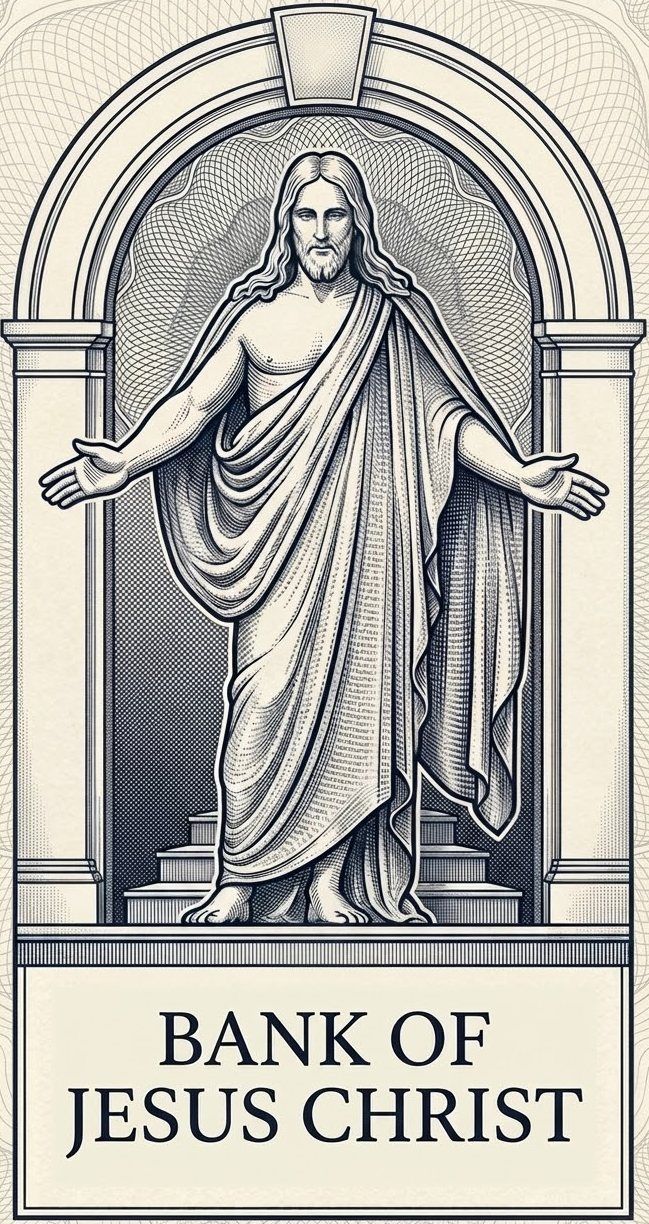
The Office reproduces the claim as made, then discloses the record it was measured against.
What the record shows
On three independent fronts — archaeological, linguistic, and genetic — the book’s historical claims have not been corroborated, and on the genetic front have been contradicted. Jennifer Raff’s survey of the population-genetic record (2022) finds no descent of Indigenous American populations from the claimed Israelite ancestry. Dan Vogel (1986) reads the text not as recovered history but as a religious solution to a live nineteenth-century American question: the origin of the Native Americans. Grant Palmer (2002) locates the book’s fingerprints in the evangelical Protestantism of Joseph Smith’s own revival district — it reads like an answer to antebellum disputes because that is the environment of its production.
This is a stronger finding than “archaeology is lacking.” It places the book positively inside its author’s own intellectual world.
The founding narrative
D. Michael Quinn’s Early Mormonism and the Magic World View (1987) refuses the sanitized division between a treasure-digging Joseph and a prophetic Joseph. The seer stones, the folk-magic parchments, the treasure quest — these are continuous with the prophetic system, not a phase it replaced. The gold plates fit seamlessly into a symbolic economy that already knew hidden deposits, guarded retrieval, and recoveries frustrated by ritual impurity.
The witnesses
The Office notes only what the printed testimony says. The Three Witnesses attest that the plates were “shown unto us by the power of God, and not of man” — language already visionary rather than empirical. The ambiguity was present at the foundation.
Disclosure
The Office does not adjudicate belief, and it takes no position on what a person should hold sacred. It discloses one fact about the institution’s structure: its foundational text is, on the documentary record, a nineteenth-century composition presented as ancient history — and internal scholarship has documented this for decades. The mythology is retained as the institution’s name and brand. The operation runs in the other direction.
One click copies the complete, sourced text. Paste it into Claude, Kimi, ChatGPT, or any AI session and ask your questions there. Even our longest document fits in one paste.
Sources
- Dan Vogel, Indian Origins and the Book of Mormon (1986) — filed under “Religious Solutions from Columbus to Joseph Smith.”
- Dan Vogel, Joseph Smith: The Making of a Prophet (2004) — the treasure-seeking milieu; the chapter “Slippery Treasures.”
- Grant Palmer, An Insider's View of Mormon Origins (2002) — “The Bible in the Book of Mormon,” “Evangelical Protestantism in the Book of Mormon,” “Witnesses to the Golden Plates.”
- D. Michael Quinn, Early Mormonism and the Magic World View (1987) — seer stones, treasure-digging, folk magic as continuous with the prophetic system.
- Fawn Brodie, No Man Knows My History (1945).
- Jennifer Raff, Origin: A Genetic History of the Americas (2022) — the population-genetic record.
- The Testimony of Three Witnesses, as printed in every edition of the Book of Mormon.